
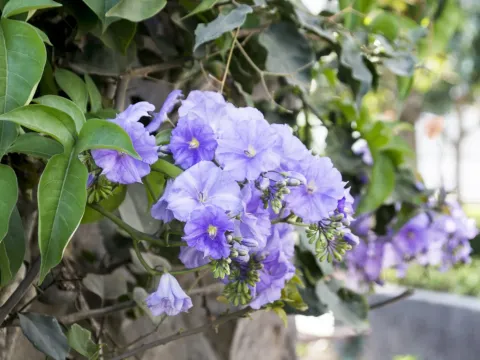
Giant Potato Creeper
Solanum wendlandii
Solanum wendlandii, commonly known as the Giant Potato Creeper, is a vigorous woody climber belonging to the Solanaceae family. Native to Costa Rica, this plant is renowned for its large, showy clusters of lavender-blue flowers and rapid vertical growth.
What the section contains
Giant Potato Creeper
The plant thrives in warm, humid climates and requires full sun to partial shade for optimal development. It is highly intolerant of frost, making it suitable for year-round outdoor cultivation only in tropical and subtropical zones.
Soil requirements focus on high nutrient availability and excellent drainage. A rich, loamy soil profile is preferred, as the plant demands significant moisture during its growing season to support its extensive foliage and floral output.
For container gardening, which is common in cooler regions, a large pot with a high-quality, organic-rich potting mix is essential. Regular fertilization with balanced NPK fertilizer is needed to sustain the blooming cycle throughout the summer months.
Structural support is a fundamental requirement of its agrotechnics. Due to its climbing nature and weight, the plant requires robust trellises, arbors, or walls to allow for proper airflow and display of its blooms.
The primary pests affecting Solanum wendlandii include spider mites and aphids, which are particularly problematic in dry or indoor conditions where air circulation is limited.
Root rot caused by pathogens such as Pythium and Rhizoctonia poses a severe threat if the growing medium remains waterlogged for extended periods, stressing the plant's root system.
Whiteflies are another common concern, often colonizing the undersides of leaves and leading to the development of sooty mold, which impairs photosynthesis and reduces overall plant vigor.
Integrated pest management (IPM) strategies, including the use of horticultural oils and predator mites, are recommended for maintaining plant health without excessive reliance on synthetic chemicals.
Strict sanitation practices, such as removing fallen leaves and pruning dead wood, help in preventing the establishment of fungal spores and overwintering pest populations in the vicinity of the plant.