
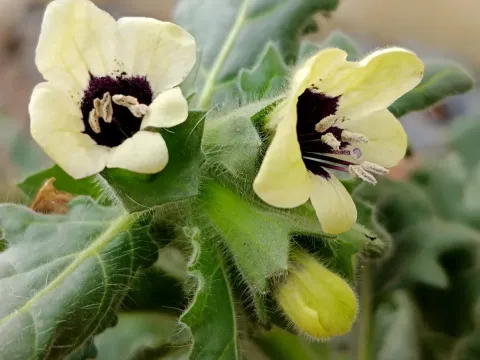
Henbane
Hyoscyamus
Henbane (Hyoscyamus niger), a member of the Solanaceae family, is cultivated primarily as a biennial medicinal plant. Seeds are typically sown in late autumn or early spring as soon as the soil reaches a workable condition.
What the section contains


Henbane
Autumn sowing allows for natural stratification, which ensures more uniform germination early in the season. Seeds should be sown shallowly, ideally at a depth of 1-2 centimeters, to prevent poor emergence rates.
Industrial planting usually involves maintaining row spacing of 45 to 60 centimeters, which allows for efficient mechanical weed control and proper air circulation around the developing plants.
Using high-quality, viable seeds is critical, as the crop's development during the initial stages is quite slow and requires a favorable germination environment.
When spring sowing, moisture management in the topsoil is essential to prevent the seeds from drying out, which can significantly decrease the stand density.
Henbane thrives in open, sunny locations, as exposure to sunlight is crucial for the optimal biosynthesis of alkaloids within the leaves of the plant.
The crop prefers fertile, light-textured soils, such as loams or sandy loams, with a neutral to slightly alkaline pH level to ensure robust growth.
Good drainage is vital for henbane; the plant does not tolerate waterlogged conditions, which can lead to root rot and diminished pharmacological quality.
Effective maintenance includes regular hoeing and weeding, particularly during the first year, to minimize competition with unwanted vegetation for soil nutrients.
Balanced fertilization is necessary, but excessive nitrogen should be avoided to prevent over-luxuriant leaf growth, which may decrease the overall concentration of active compounds.
The yield of henbane is highly dependent on effective cultivation practices and the specific environmental conditions during the growing season.
Pharmacological value, determined by the content of alkaloids like hyoscyamine and scopolamine, is the primary indicator of the crop's economic success.
The planting density must be carefully managed; excessive crowding can lead to smaller leaf sizes and reduced accumulation of secondary metabolites.
Timely harvest is essential to capture the period when the alkaloid concentration is at its highest, usually during the flowering stage in the second year of growth.
Proper adherence to agronomic guidelines ensures sustainable yields, making henbane a viable option for specialized pharmaceutical-grade crop production.
Henbane is susceptible to several common Solanaceae pests, most notably the Colorado potato beetle, which can cause significant damage to the foliage if left unchecked.
Diseases such as powdery mildew and various leaf spots are common issues that typically arise under conditions of high humidity or poor field ventilation.
Strict crop rotation practices are necessary to prevent the buildup of soil-borne pathogens, ensuring the land remains productive for future cycles of the crop.
- Colorado potato beetle
- Aphids
- Powdery mildew
- Root rot
The use of pesticides must be strictly limited and managed to meet the stringent purity standards required for pharmaceutical applications of the raw material.
Harvesting henbane requires precise timing based on the developmental phase of the plant to ensure the highest possible concentration of its active medicinal properties.
In the first year, farmers harvest the basal leaf rosettes, while in the second year, the collection focuses on leaves and flowering tops gathered at the peak of the bloom.
Once harvested, the material must be transported immediately to the drying facility to prevent heating, discoloration, and quality loss through undesirable fermentation.
Drying is conducted in well-ventilated areas or controlled-temperature ovens, keeping the temperature below 45 degrees Celsius to preserve the chemical composition.
Final product processing includes removing stems and impurities, followed by storage in moisture-proof containers to maintain the stability of the active ingredients.