
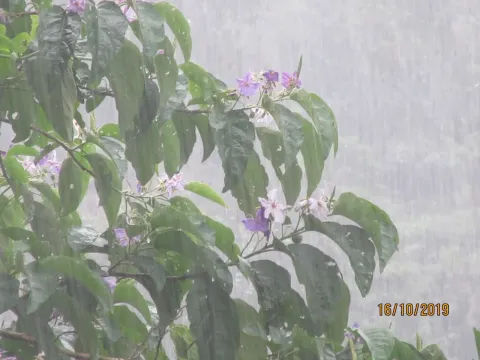
Giant potato creeper
Solanum grandiflorum
Solanum grandiflorum, commonly known as the giant potato creeper, belongs to the family Solanaceae. This vigorous shrub is recognized for its large, fragrant, star-shaped flowers that transition from deep blue to white.
What the section contains
Giant potato creeper
Native to Brazil, this plant thrives in warm, tropical climates. Due to its sensitivity to cold, it is typically grown as a container plant or in glasshouses in temperate regions where winter frosts occur.
The plant requires high light intensity to encourage profuse blooming. In cultivation, positioning in a south-facing location or providing supplemental lighting is essential for maintaining plant vigor.
A well-draining, nutrient-rich potting mix is crucial for the health of Solanum grandiflorum. It prefers slightly acidic to neutral soils to ensure optimal nutrient absorption throughout the growing season.
Regular irrigation is necessary to keep the soil moist but not waterlogged. Supplemental fertilization during the active growth phase ensures the production of healthy foliage and large flower clusters.
Solanum grandiflorum is susceptible to common greenhouse pests, with whiteflies and spider mites being the most frequent threats to its foliage in confined environments.
The accumulation of honeydew secreted by sucking insects can lead to the development of sooty mold, which further interferes with the plant's photosynthetic capacity.
Root rot is a significant concern if the drainage is insufficient or if the irrigation schedule does not account for changes in environmental temperature and humidity levels.
- Monitor leaf undersides frequently for early signs of infestation.
- Use systemic insecticides or horticultural soaps for targeted pest management.
- Maintain adequate spacing between plants to improve air circulation.
Proactive monitoring and the maintenance of a stable microclimate are the most effective strategies for preventing widespread damage from pathogens and pests.