
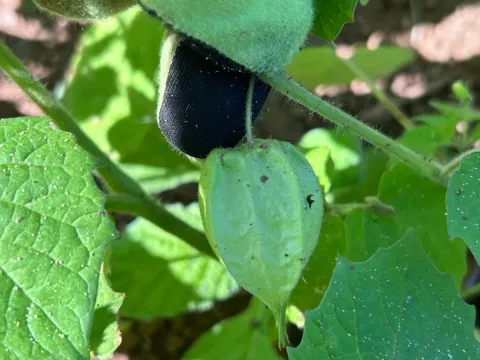
Giant Groundcherry
Physalis maxima
The Giant Groundcherry (Physalis maxima) is a perennial herbaceous plant belonging to the Solanaceae family. Due to its biological requirements, this crop demands careful planning regarding planting dates, as it is a heat-loving species.
What the section contains
Giant Groundcherry
Seeds are typically sown indoors 40–50 days before the anticipated outdoor transplanting date, usually in late March or early April. It is crucial to maintain a stable germination temperature between 22 and 25 degrees Celsius for optimal seedling development.
Seedlings should be moved to their permanent location only after the risk of frost has passed, as young plants are highly sensitive to low temperatures. Late May or early June is considered the most suitable time for planting in temperate regions.
When transplanting, it is important to maintain proper spacing, as this variety exhibits vigorous vegetative growth. A distance of at least 60–70 centimeters between rows ensures sufficient light exposure for all plants.
Using dark agricultural mulch around the base of the bushes can help speed up maturity. This technique keeps the soil moist and warms the root system, which is essential for the healthy development of strong stems.
This crop prefers sunny, well-lit locations protected from cold winds. Planting in shaded areas leads to leggy stems and a significant decrease in fruit set, which can compromise the final yield.
The soil should be light, fertile, and have a neutral pH level. The Giant Groundcherry is sensitive to waterlogging; therefore, on heavy clay soils, it is necessary to install proper drainage or build raised beds to ensure root health.
The plant responds well to organic fertilizers like compost or well-rotted manure. However, an excess of nitrogen during the flowering stage should be avoided, as it may promote excessive leaf growth at the expense of fruit production.
Regular watering is essential, especially during the active flowering and fruit-setting phases. It is best to water at the base of the plant to avoid wetting the foliage, which helps reduce the risk of fungal infections.
The temperature optimum for growth ranges from 20 to 28 degrees Celsius. During extreme heat waves exceeding 35 degrees, pollen may become sterile, requiring temporary shading to protect the plants.
The yield of the Giant Groundcherry depends heavily on the amount of sunlight and the quality of agronomic care. With proper cultivation techniques, this variety can produce a volume of fruit that significantly exceeds common species.
Fruits develop inside a papery husk, which changes color and texture as it matures. Regular pruning of side shoots allows the plant to focus its energy on producing larger and more succulent berries.
The fruits of this species are known for their density and juiciness, making them well-suited for transportation and long-term storage. Their robust nature allows them to maintain quality for extended periods.
To maximize yields, potassium and phosphorus fertilizers are recommended during the fruit-filling stage. These nutrients improve flavor characteristics and help increase the sugar content of the harvest.
Productivity can remain high until the onset of significant cold weather. In greenhouse environments, the harvest season can be extended for several months, significantly increasing total output.
The most common pests for this crop include whiteflies and spider mites, which thrive in dry air conditions. Regular inspection of the undersides of the leaves helps identify infestations at an early stage.
Common diseases include late blight and various types of root rot. These issues are often triggered by improper watering practices and poor air circulation within dense plantings.
Prevention strategies involve strict crop rotation, ensuring the plant is not grown in the same spot for at least 3–4 years. It is also advised not to plant groundcherries after tomatoes or potatoes due to shared pathogens.
Biological fungicides are recommended for disease management, as they are safer for the environment. If infections are detected, affected parts of the plants should be promptly removed and disposed of.
Soil-dwelling pests like mole crickets can be managed through deep soil cultivation and the use of traps before seedlings are planted. Monitoring the health of the plantation ensures the success of the growing season.
Harvesting begins when the husk turns dry and straw-colored, indicating that the fruits inside have reached their peak maturity. At this stage, the berries have developed their characteristic aroma and flavor.
A major advantage of this crop is that the fruits can continue to ripen after being harvested. This allows farmers to complete the harvest before frost, preventing any potential loss from weather damage.
After picking, the fruits should be husked and dried in a well-ventilated, shaded area. This process prevents mold development during storage and significantly improves the shelf life of the berries.
Harvested crops are best stored in a cool room at temperatures between 5 and 10 degrees Celsius. Under these conditions, the fruits can maintain their freshness and quality for several weeks.
Giant Groundcherry fruits are versatile in the kitchen, used for sauces, jams, candied snacks, or eaten fresh. Their high pectin content makes them ideal for preservation and various culinary applications.