
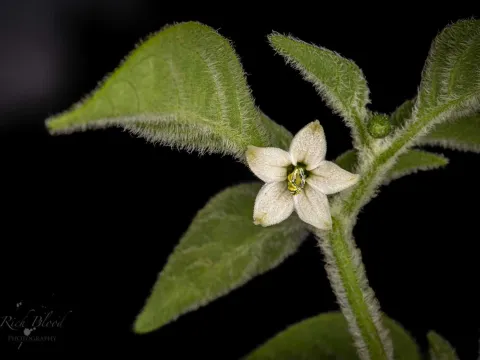
Galapagos pepper
Capsicum galapagoense
The Galapagos pepper (Capsicum galapagoense) is a wild species within the Solanaceae family, native to the Galapagos Islands. It is biologically distinct from common peppers, characterized by its shrub-like growth habit and dense hair covering on stems and leaves.
What the section contains
Galapagos pepper
This species naturally inhabits arid, rocky coastal environments. Its unique morphology is a direct result of evolutionary adaptation to limited water resources and high salinity, making it a drought-tolerant plant in its native habitat.
To cultivate this species successfully, it requires very well-draining, rocky, or porous soil mixtures. It cannot tolerate waterlogging, which quickly leads to root rot. High solar intensity is necessary for the plant to thrive and maintain its characteristic structure.
Temperature management is critical; the species thrives in warm conditions, typically ranging from 22°C to 28°C. Being a tropical native, it lacks frost tolerance and requires consistent ambient conditions throughout its life cycle.
While not a major agricultural crop for consumption, its primary value lies in its genetic potential. It serves as a vital source of resistance genes against various pathogens and environmental stressors that typically affect commercially grown capsicum species.
The main threats in controlled environments include spider mites and whiteflies, which thrive on the dense trichomes of the foliage. Fungal pathogens, specifically those causing damping-off and root decay, are prevalent if soil aeration is insufficient or moisture levels are too high.