
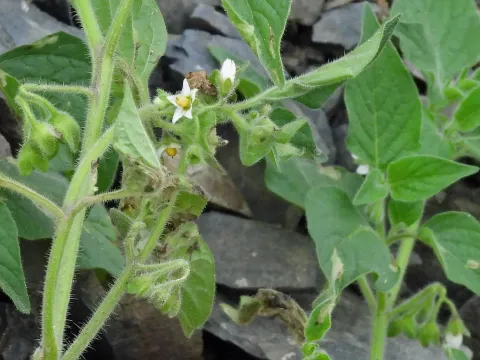
Hairy nightshade
Solanum physalifolium
Hairy nightshade is an annual herbaceous plant that reproduces primarily through seeds. Germination typically begins in late spring when soil temperatures reach favorable levels for rapid emergence.
What the section contains
Hairy nightshade
The timing of seedling emergence often coincides with the planting season of various commercial crops, making it a significant competitor in early growth stages. Efficient management requires early intervention.
Agricultural practices should focus on seedbed preparation to induce early germination, followed by cultivation. Mechanical removal of seedlings before they establish deep roots is critical for control.
Since the seeds can remain dormant for several years, a multi-year management strategy is necessary to deplete the seed bank. Crop rotation involving competitive cover crops can significantly reduce weed pressure.
Pre-emergence herbicide applications can be effective if applied correctly, according to regional agricultural guidelines. Timing is essential to prevent the weed from competing for limited resources.
Hairy nightshade thrives in sunny, open areas with nutrient-rich soils. It shows a preference for disturbed habitats, such as cultivated fields, where light availability is not limited by other canopy cover.
The plant demonstrates high adaptability to various soil types, ranging from sandy loams to heavy clays. However, it performs best in well-drained soils that provide consistent access to moisture during the growing season.
Nutrient requirements are similar to those of other Solanaceae family members. High nitrogen availability during the vegetative stage promotes vigorous growth, leading to increased biomass and higher seed production.
The species is tolerant of a range of pH levels, though neutral to slightly alkaline soils appear to support optimal growth. It is highly efficient at extracting phosphorus from the soil.
Temperature plays a crucial role in development; while it is moderately hardy, it performs best in warm climates. Excessive shading from the crop canopy is an effective natural method for suppressing its growth.
Hairy nightshade is a known host for numerous plant viruses and fungal diseases that affect potatoes, tomatoes, and peppers. Its presence near production fields can drastically increase the risk of disease transmission.
Pest populations, including the Colorado potato beetle, frequently utilize Hairy nightshade as a reservoir. This creates a bridge for infestations, allowing pests to move easily into cash crops.
Bacterial and fungal pathogens can overwinter or survive on the plant's tissue, complicating management for neighboring crop fields. Early detection and removal are essential to prevent localized outbreaks.
Integrated pest management (IPM) strategies must account for the presence of this weed to ensure that insect and disease control measures are successful. Monitoring its population density is a standard agronomic practice.
- Colorado potato beetle
- Aphids
- Late blight
- Early blight
- Potato leafroll virus