
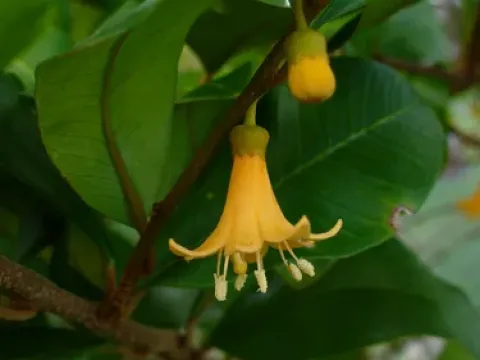
Goetzea elegans
Goetzea elegans
Goetzea elegans is an extremely rare shrub and a native of Puerto Rico, which means it is not currently grown as a commercial agricultural crop.
What the section contains
Goetzea elegans
Propagation is primarily conducted in botanical garden settings using seeds that must be sown immediately after harvest to ensure viability.
The planting medium should be a well-draining, nutrient-rich substrate, typically incorporating organic matter to support delicate root development.
Seed germination requires high humidity and consistent warm temperatures, typically ranging between 24 and 28 degrees Celsius for best results.
Once seedlings have developed, they are moved to individual pots to ensure they establish a robust root system before any potential acclimatization.
Belonging to the Solanaceae family, this species grows as an evergreen shrub or a small tree that thrives in tropical environments.
The plant requires plenty of sunlight for optimal health, although young plants may benefit from partial shade to protect them from intense midday heat.
Ideal soil conditions involve a fertile, well-draining base, reflecting its natural habitat often found in limestone or rocky coastal forest areas.
Consistent moisture is vital for this species, as it lacks drought tolerance and requires a steady supply of water during the growing season.
Climate management is crucial, as the plant does not tolerate cold drafts or wide fluctuations in temperature throughout the day.
As a critically endangered species, Goetzea elegans is not cultivated for commercial food yield, and its productivity remains unmeasured in agricultural terms.
The plant produces bright orange fruits that are primarily of interest to researchers and conservationists rather than for large-scale consumption.
In its native environment, the fruit plays an ecological role by supporting local avian populations that consume the berries and disperse the seeds.
Cultivation efforts are currently focused on ex-situ conservation and botanical study rather than maximizing harvestable biomass.
The limited number of specimens available worldwide makes any discussion of economic yield irrelevant at this stage of the species' existence.
The primary threat to Goetzea elegans is the fragmentation and loss of its natural habitat in Puerto Rico due to human development.
In cultivation, the plant is susceptible to common greenhouse pests, including spider mites and various scale insects that thrive in confined spaces.
Fungal pathogens pose a risk when humidity levels are kept too high without adequate air circulation, leading to potential leaf and stem decay.
Root rot is a major threat if the plant is subjected to poor drainage or overly compacted soil, especially during periods of low light.
Management of these threats involves strictly controlled growing conditions and frequent monitoring for early signs of biotic or abiotic stress.