
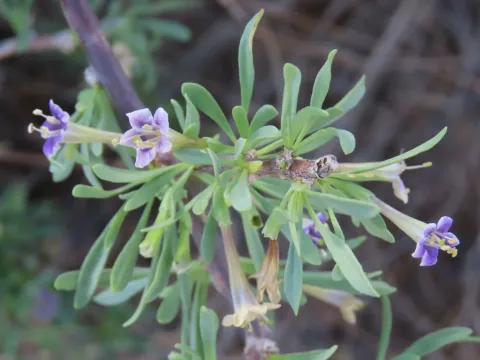
Box-leaved boxthorn
Lycium bosciifolium
Propagation of Lycium bosciifolium is typically achieved through seeds or stem cuttings, depending on the desired agricultural scale.
What the section contains
Box-leaved boxthorn
Seeds should be sown in early spring, ideally after a period of cold stratification to break dormancy and ensure uniform germination.
Cuttings are taken from healthy, semi-hardwood stems and planted in a well-draining growth medium to promote efficient root development.
Proper spacing between plants is crucial during initial field planting to allow for optimal airflow and prevent overcrowding as the bushes mature.
Seedlings should be hardened off before being transplanted to the open field, ensuring they are adjusted to outdoor environmental conditions.
As a member of the Solanaceae family, this species is highly adapted to arid and semi-arid climates, demonstrating excellent drought tolerance.
The plant thrives in full sun exposure, which is necessary for vigorous growth and maximizing the production of its medicinal or food-grade fruits.
It prefers well-drained, sandy-loam soils but can adapt to a variety of soil types provided that there is no risk of waterlogging at the roots.
Minimal fertilization is generally required, though moderate organic input can enhance plant health and overall yield during the peak growing season.
Maintenance involves pruning to maintain an open canopy structure, which facilitates easier harvesting and improves exposure to sunlight.
The agricultural value of Lycium bosciifolium lies in its fruit, which contains various compounds consistent with the genus Lycium properties.
Yields are influenced by the plant's age, with full production potential typically reached after the third or fourth year of establishment.
Consistent pruning and weed management are essential practices that directly contribute to increased fruit output each season.
The fruit can be consumed fresh or processed, with drying being the most common method for long-term preservation and commercial trade.
Effective orchard management ensures a steady supply of high-quality raw material throughout the extended harvest window.
Fungal diseases are the primary concern for this crop, especially in environments where humidity levels remain high for extended periods.
Powdery mildew may develop on the foliage if the air circulation within the canopy is insufficient, necessitating periodic thinning of branches.
Aphids represent a common pest threat, frequently attacking the tender tips of new shoots and potentially reducing overall plant vigor.
Spider mites can also become an issue during hot, dry spells, requiring careful monitoring to prevent significant damage to the leaves.
Integrated pest management strategies are recommended to minimize chemical reliance and preserve the ecological balance of the plantation.
The harvesting process generally commences in late summer and can extend into autumn depending on regional climate variations.
Fruits are gathered when they exhibit their characteristic mature color, ensuring the highest concentration of desirable compounds.
Care must be taken during the harvest, as the plant features thorns, and the fruits are soft enough to bruise if handled improperly.
Immediate post-harvest processing is highly recommended to maintain product quality and prevent the rapid onset of fungal decay.
Proper storage involves keeping the processed material in a cool, dry, and dark environment to retain its shelf life and nutritional profile.