
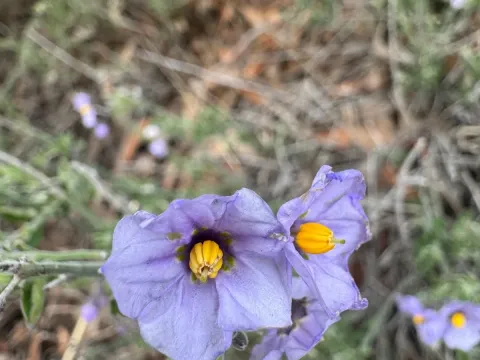
Blue witch nightshade
Solanum umbelliferum
Blue witch nightshade (Solanum umbelliferum) is a perennial shrub belonging to the Solanaceae family, native to California and Northern Mexico. It is widely recognized for its beautiful violet-blue flowers that bloom in clusters throughout the growing season.
What the section contains
Blue witch nightshade
This species thrives in sunny, open environments and is well-adapted to Mediterranean-type climates. It possesses a high tolerance for drought, making it an excellent candidate for water-wise gardening and ecological restoration projects.
Soil requirements for this plant are centered on excellent drainage. It performs best in rocky or sandy soils that do not retain excess water, which helps prevent the development of root rot in the crown of the shrub.
Propagation is typically achieved through seeds or stem cuttings. Once established, the shrub requires very little supplemental water, surviving mainly on natural precipitation patterns typical of its original geographic range.
In terms of land use, the plant is primarily cultivated for ornamental purposes in xeriscapes. It provides valuable habitat and floral resources for native pollinators, including various species of bees and butterflies.
Like many plants in the nightshade family, this species can be susceptible to common fungal pathogens such as powdery mildew. This usually occurs if the plant is grown in areas with poor air circulation or excessive shade.
Pests such as aphids and spider mites can sometimes inhabit the foliage. These insects are attracted to new growth and can cause localized yellowing if infestations become severe over an extended period of time.
Management of these threats involves monitoring and physical removal where possible. Maintaining proper spacing between individual plants ensures that airflow remains sufficient to discourage fungal growth.
Overwatering is the primary cultural error that leads to plant stress. By strictly limiting irrigation after the establishment phase, the gardener significantly reduces the plant's vulnerability to soil-borne pathogens.
Sanitation practices, such as removing fallen leaves and dead wood, help maintain the overall health of the shrub. Keeping the area beneath the plant clear prevents the accumulation of moisture-loving spores.