
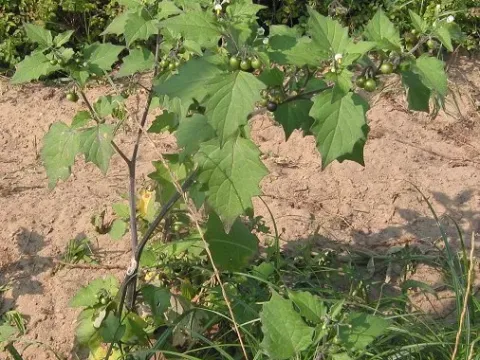
Black nightshade
Solanum annuum
Black nightshade (Solanum nigrum) is an annual herbaceous plant belonging to the Solanaceae family. While often categorized as a weed in many regions, it is cultivated globally as a vegetable and medicinal crop.
What the section contains
Black nightshade
Sowing schedules are highly dependent on local climate conditions, as the plant is sensitive to frost. The optimal time for planting in the field is when soil temperatures consistently stay above 15–18 degrees Celsius.
In temperate climates, the transplant method is preferred to extend the growing season. Seeds are sown in seedbeds 30 to 40 days before the projected transplanting date to ensure strong plant development.
The planting pattern should provide adequate spacing between rows, usually 40–50 cm, to allow for optimal airflow and sunlight penetration. This reduces the risk of fungal infections and promotes uniform berry ripening.
High-quality, viable seeds are essential for success. They are sown at a shallow depth of 1–2 cm, as they require sufficient light and moisture to break dormancy and emerge uniformly across the field.
This crop thrives in fertile, well-draining soils with a neutral or slightly acidic pH level. Soil structure should be loose to allow the root system to expand and absorb nutrients effectively throughout the vegetative stage.
Black nightshade is a photophilic plant, requiring full sun exposure to reach its maximum yield potential. Insufficient light leads to etiolation, reduced berry set, and lower nutritional quality of the fruit.
Moisture management is critical, especially during the flowering and fruit-setting phases. While the plant can tolerate short periods of dry conditions, consistent irrigation is needed to maintain high fruit quality.
Inter-row cultivation is a standard practice to keep the field free of weeds and improve soil aeration. This physical maintenance encourages root health and provides a boost to overall plant vigor.
The temperature optimum for growth ranges from 20 to 25 degrees Celsius. Extreme cold or heat stress can cause flower abortion and significantly reduce the total harvestable biomass of the crop.
Yield capacity depends largely on the selected variety and the implementation of intensive farming practices. Modern cultivars are bred for higher berry size and sugar content, resulting in increased economic return.
The fruit, appearing as multi-seeded black berries in umbelliform clusters, should be harvested only when fully mature. Immature fruit contains toxic alkaloids, which necessitates strict monitoring during the harvest phase.
Yield optimization is achieved through balanced nutrient management, specifically focusing on nitrogen during early growth and phosphorus-potassium application during the reproductive stage to enhance fruit quality.
Economic feasibility relies on the efficient handling of produce post-harvest. Due to the high sugar content, the berries are prone to fermentation, requiring prompt processing or cold storage after collection.
Regular harvesting cycles are necessary as the fruits do not ripen simultaneously. Workers often pass through the fields multiple times to gather only the fully ripe, dark-colored berries for market distribution.
Fungal diseases such as late blight and early blight pose significant threats to Solanum nigrum, mirroring the disease profile of its relatives like tomatoes and potatoes. Effective management requires rigorous crop rotation.
Pest pressure is a major concern, with the Colorado potato beetle and various aphids being the most common culprits. Integrated Pest Management (IPM) strategies, including biological controls, are highly recommended.
Monitoring the fields for signs of stress, such as yellowing leaves or spots, is vital for early intervention. If infestations occur, targeted treatments must be applied while respecting strict pre-harvest intervals.
To prevent disease spread, it is essential to keep the field clean of plant debris after the harvest season. Removing infected material reduces the inoculum load for the following planting cycle.
Careful selection of pesticides is mandatory, ensuring that all products used are registered for edible crops and adhere to safety standards regarding chemical residues on the fruit.
Harvesting black nightshade is a delicate process due to the thin skin of the berries. It is best conducted during the early morning hours to avoid high temperatures that can accelerate fruit softening.
Post-harvest handling involves the use of ventilated crates to prevent moisture buildup. Proper ventilation is the primary factor in maintaining the firmness and shelf life of the berries during transport.
Sorting must take place immediately after harvest to ensure that only ripe, high-quality berries proceed to the processing stage. The presence of green or overripe fruit can compromise the quality of the batch.
Logistics must be streamlined to deliver the berries to the processing plant or cooling facility within hours of harvesting. Maintaining a low-temperature environment is essential for preserving the organoleptic properties of the crop.
Efficient post-harvest cleanup concludes the seasonal cycle, where all remaining plant material is incorporated or removed to ensure the soil is ready for the next crop, preventing the persistence of soil-borne pathogens.