
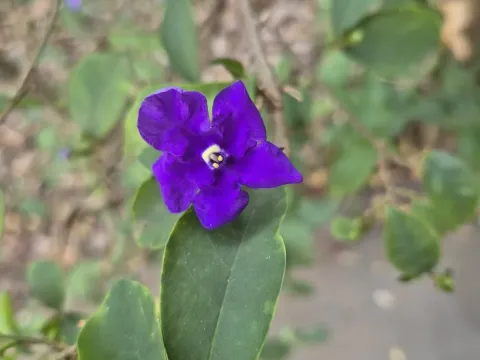
Brunfelsia
Brunfelsia L.
Brunfelsia (Brunfelsia L.) is a genus of evergreen shrubs and small trees belonging to the Solanaceae family. Native to the tropical regions of the Americas, these plants are highly valued in ornamental horticulture for their unique changing flower colors.
What the section contains


Brunfelsia
Botanically, these plants feature alternate, simple, and leathery leaves. The flowers are typically tubular and have five lobes, transitioning through various shades of purple, lavender, and white as they mature, which provides an extended display of beauty.
For successful cultivation, Brunfelsia requires bright, indirect light. Placing the plant in a spot with morning or late afternoon sun is ideal, as direct noon light can cause leaf scorching and structural damage to the foliage.
The plants thrive in well-draining, acidic to neutral soil rich in organic matter. A mixture of peat moss, perlite, and potting soil provides the necessary texture to prevent waterlogging and promote healthy root respiration.
Temperature management is critical. While they prefer temperatures between 65°F and 75°F (18°C–24°C), they require a cooler period during winter—around 55°F (12°C)—to encourage the formation of flower buds for the upcoming spring season.
Common pests include spider mites, mealybugs, and scale insects. Spider mites are particularly problematic in dry indoor environments, often manifesting as fine webbing and stippling on the leaves, requiring prompt acaricide treatment.
Mealybugs can be detected by white, cotton-like masses in leaf axils. Physical removal with alcohol-soaked swabs or the application of insecticidal soaps is effective in the early stages of infestation to prevent the spread to other plants.
Chlorosis is a frequent physiological issue in Brunfelsia, often caused by high soil pH or iron deficiency. The leaves turn yellow while the veins remain green, signaling a need for chelated iron supplements or acidification of the irrigation water.
Root rot, driven by Phytophthora or Pythium species, occurs when the soil remains constantly wet. This condition is difficult to reverse, so prevention through proper irrigation and porous soil is the primary defense strategy.
Regular monitoring of the plant's health and maintenance of adequate humidity levels will significantly reduce the risk of both pest attacks and fungal infections throughout the growing season.