
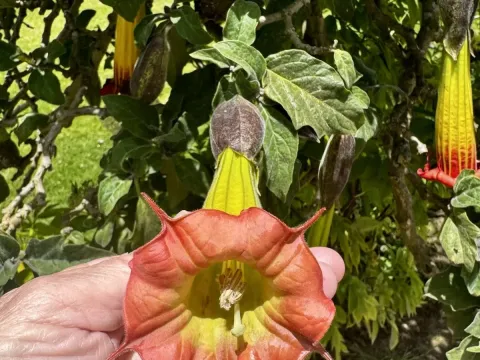
Brugmansia
Brugmansia Pers.
Brugmansia (Brugmansia Pers.) is a genus of perennial woody plants belonging to the Solanaceae family. Often referred to as "Angel's Trumpets," these plants are highly regarded in ornamental horticulture for their spectacular, pendulous, trumpet-shaped flowers that release a potent fragrance in the evening.
What the section contains


Brugmansia
Native to the tropical regions of South America, specifically the Andean foothills, this species is strictly heat-loving. In temperate climates, Brugmansia is typically cultivated in containers, allowing for easy relocation to a greenhouse or frost-free environment during the winter months.
The plant thrives in fertile, well-draining, and moisture-retentive soil with a slightly acidic to neutral pH. Providing ample space for root expansion is crucial, as the plant is a vigorous grower that requires consistent access to water and essential nutrients during its vegetative stage.
Optimal growth requires full sun exposure, although some light shade is tolerated in extremely hot regions. Intensive fertilization with high-potassium formulas is mandatory throughout the growing season to support the formation of its heavy, elaborate blooms and to maintain leaf color.
Beyond its aesthetic value, Brugmansia holds significance in container gardening and landscape design. However, it is essential to handle all parts of the plant with care, as they contain toxic alkaloids. Proper safety measures, including the use of gloves, are recommended when pruning or propagating.
Spider mites and whiteflies are the primary pests affecting Brugmansia, particularly when grown in enclosed spaces with low humidity. These insects feed on sap, leading to foliage chlorosis, stunted growth, and a significant reduction in overall plant vigor if not managed early.
Root rot is a critical threat often caused by improper drainage or excessive soil moisture levels. This condition leads to the decay of the root system, causing the foliage to wilt despite the soil being moist, and can rapidly become fatal if the plant is not repotted immediately.
Fungal diseases, including gray mold (Botrytis), can develop under cool, damp conditions or in overcrowded planting areas. Maintaining proper spacing and ensuring adequate airflow between containers is essential to minimize the risk of spreading fungal pathogens.
Integrated pest management, including the use of targeted acaricides and insecticides, is necessary when manual control proves insufficient. It is crucial to read labels carefully and apply products during the cooler hours of the day to avoid leaf burn caused by direct sunlight.
Good cultural practices, such as routine sanitation, removing dead leaves, and regular pruning, significantly improve plant health. A well-nourished, hydrated, and ventilated plant demonstrates significantly higher resistance to common diseases and pest infestations.