
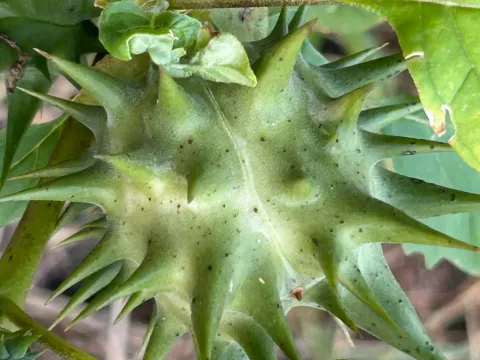
Datura ferox
Datura ferox
Sowing of Datura ferox is typically performed in early spring once the soil temperature consistently remains above 15 degrees Celsius.
What the section contains
Datura ferox
Seeds should be planted at a depth of 3 to 4 centimeters to ensure adequate moisture intake and to prevent premature drying of the seedbed.
In regions with shorter growing seasons, starting the plants in greenhouses or seedling trays is recommended to ensure a sufficient vegetative period.
Proper spacing between plants is crucial, as mature Datura ferox specimens exhibit significant branching and require room for optimal growth.
Pre-sowing treatments, such as soaking seeds in warm water, can improve germination rates, which are often uneven due to the seed's dormancy.
Datura ferox is a heat-loving plant from the Solanaceae family that requires warm conditions and full sun exposure to thrive throughout its life cycle.
The ideal soil for this crop is a well-drained, fertile loam that supports healthy root development and prevents waterlogging issues.
Adequate sunlight is essential for the accumulation of tropane alkaloids, which determine the medicinal quality of the harvested vegetative parts.
Regular irrigation is necessary during the peak of summer, especially when the plant begins to form its reproductive organs and large fruit pods.
A balanced fertilization program, focusing on nitrogen during early growth and phosphorus for flowering, enhances overall biomass production.
The total yield of Datura ferox depends heavily on the climatic conditions and the intensity of the agronomic management applied to the fields.
The primary yield components include leaves and seeds, which are highly valued in the pharmaceutical industry for their potent chemical composition.
Yield monitoring is conducted by calculating the dry weight of harvested biomass per hectare, which reflects the effectiveness of the cultivation methods.
Timely weed control in the early weeks of the crop is vital, as slow initial growth makes the plant vulnerable to competition from aggressive weeds.
Maximizing yield requires precise harvesting timing, often aligned with the onset of fruit maturation to capture the highest alkaloid levels.
Powdery mildew is a common fungal threat, particularly in humid or stagnant air conditions, leading to white patches on the leaf surfaces.
Root rot diseases occur in waterlogged environments, emphasizing the need for excellent drainage systems in any commercial plantation.
Several pests, including aphids and Colorado potato beetles, frequently target Solanaceae species and require prompt scouting and treatment.
Spider mites thrive during hot and dry spells, sucking sap from the leaves and significantly reducing the plant's photosynthetic capacity.
Integrated pest management strategies should be employed to minimize the use of harsh chemicals while protecting the crop from infestation.
Harvesting of the leaves is usually performed in stages, selecting mature and healthy foliage to ensure the highest concentration of active compounds.
Fruit capsules are collected when they start to turn brown but before they split open to drop their seeds into the soil surface.
Personnel involved in the harvest should exercise caution, as the plant possesses toxic properties that can cause irritation to sensitive skin.
Post-harvest handling is critical; drying must occur in well-ventilated areas to prevent fungal growth and maintain the structural integrity of the plant.
Mechanical harvesting options can be utilized for larger fields to increase efficiency, though manual sorting is often required for high-purity batches.