
Desert henbane
Hyoscyamus desertorum
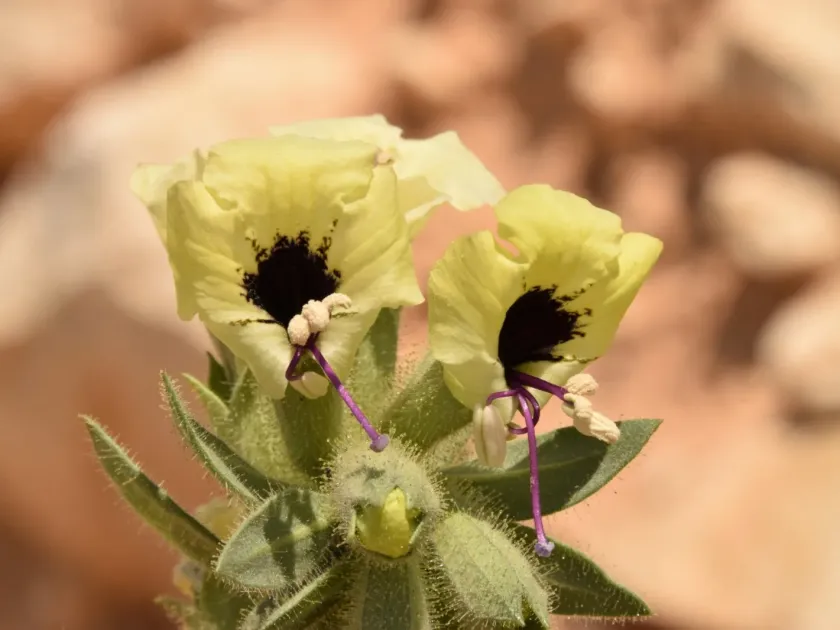
Description
Sowing dates
Sowing of desert henbane is typically conducted in the spring when the soil temperature becomes consistently warm. Because the seeds often have low germination energy, pre-sowing stratification is recommended to improve the emergence rate.
The seeds should be planted at a shallow depth of no more than 1.5–2 centimeters. Maintaining sufficient soil moisture during the first two weeks is crucial for the survival of emerging seedlings in arid environments.
A row-planting method with spacing up to 60 centimeters between rows is advised. This layout allows for easier mechanical weed control and ensures that each plant receives adequate space for root system development.
In regions prone to severe drought, winter sowing is often practiced. This approach allows growers to utilize residual soil moisture from snowmelt, providing a stronger start for the plants in the early spring.
The site selection must prioritize well-drained soil. Desert henbane is highly sensitive to waterlogging, which can quickly lead to root rot and complete failure of the crop in poorly drained fields.
Growing requirements
Desert henbane, a member of the Solanaceae family, is a halophytic plant adapted to desert and semi-desert conditions. It shows remarkable tolerance for saline soils, making it a viable candidate for cultivating on otherwise unproductive lands.
The crop requires intense and constant solar exposure to thrive. Any form of shading will negatively impact the biosynthesis of alkaloids, which are the primary active ingredients valued for pharmaceutical purposes.
Soils should be light, sandy, or loamy with high aeration. Heavy, compacted soils prevent the deep taproot from developing properly, which is essential for the plant's survival in its natural arid habitat.
Although the plant is highly water-efficient, it does require minimal irrigation during the vegetative phase and rosette formation. Industrial-scale farming often utilizes drip irrigation to maintain consistent yields.
The plant grows best in temperatures ranging from +20 to +30 degrees Celsius. It is well-adapted to wide diurnal temperature fluctuations, which are typical for arid and desert climates.
Yield
The yield of desert henbane depends heavily on plant density and nutrient management. When agronomic standards are met, the plant can produce high-quality biomass rich in hyoscyamine and scopolamine.
Peak alkaloid concentration is reached during the flowering stage. Therefore, the timing of the harvest is critical to ensuring the pharmacological potency of the collected plant material.
Moderate nitrogen application is recommended to stimulate vegetative growth. However, excessive fertilization should be avoided as it may dilute the concentration of secondary metabolites, which are the target compounds.
Weed management is vital during the early stages of growth, as the plant competes poorly with aggressive weeds. Consistent inter-row cultivation is necessary to prevent the suppression of the crop.
Long-term productivity is achievable through proper crop rotation. Rotating henbane with non-solanaceous species helps manage soil pathogen levels and maintains high yield potential over several years.
Main diseases and pests
Root rot caused by fungal infections is the most significant threat to desert henbane, usually stemming from improper irrigation or waterlogged soil. These diseases can devastate a plantation very rapidly.
Pests common to Solanaceae, such as aphids and various caterpillars, can cause significant leaf damage. Early detection and targeted intervention are necessary to maintain the quality of the raw material.
Competitive weeds are a persistent threat, especially in the first few months of growth. Failure to control weeds will result in stunted plants and significantly reduced biomass production.
Powdery mildew may occur under conditions of high humidity. While chemical control is an option, it must be used sparingly and in accordance with pre-harvest intervals to ensure the safety of the final product.
Nematode infestations can be a hidden problem when growing henbane repeatedly on the same land. Implementing a strict crop rotation schedule is the most effective preventative measure against these soil-borne pests.
Harvesting
Harvesting begins during the mass flowering phase of the plant. This timing ensures that the concentration of medicinal alkaloids is at its absolute peak, maximizing the value of the harvested material.
The harvest should be performed under dry conditions, preferably in the morning after the dew has evaporated. Wet plant material is highly susceptible to mold growth during the drying process.
Mechanical mowers adjusted to a specific cutting height are used for harvesting. This ensures that only the desirable leaf and flower parts are collected, excluding the woody stem bases and soil debris.
Drying must be conducted in shaded, well-ventilated areas or in controlled-temperature dryers not exceeding 45 degrees Celsius. Overheating can lead to the degradation of active chemical compounds.
The final dried product should be stored in opaque, airtight containers. This protects the sensitive compounds from oxidation and light, ensuring the longevity and quality of the medicinal harvest.