
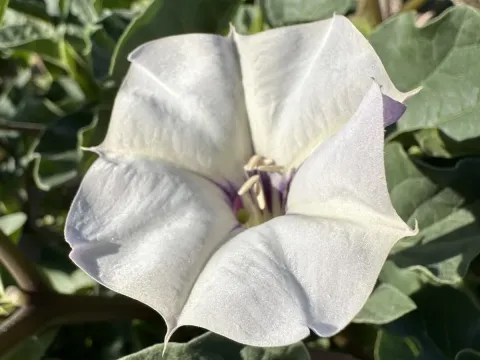
Desert thorn-apple
Datura discolor
Desert thorn-apple is a warm-season annual that requires stable, warm temperatures for germination, typically sown after all frost risks have passed in late spring.
What the section contains
Desert thorn-apple
The seeds are known to have dormancy issues, making it essential to perform scarification or soaking treatments to ensure uniform and efficient germination rates.
When starting in containers, it is recommended to use pots that allow for adequate drainage, as the seedlings are sensitive to root rot caused by stagnant water.
Direct sowing in the field requires a well-prepared seedbed with fine soil particles, allowing for the shallow placement of seeds which is crucial for early developmental success.
Thinning should be performed shortly after emergence to ensure that the strongest plants have sufficient space to develop their characteristic broad foliage.
This species thrives in arid and semi-arid environments, favoring sandy or well-drained loamy soils that prevent waterlogging and promote root aeration.
Full sun exposure is a mandatory requirement for the development of Datura discolor, as the plant needs intense light to synthesize its natural compounds effectively.
Soil nutrient levels should be managed through moderate fertilization, focusing on phosphorus to support early blooming, while avoiding excessive nitrogen which can lead to lush but weak growth.
Although it is adapted to dry conditions, supplemental irrigation during extreme drought periods will significantly improve biomass production and flower longevity.
The plant demonstrates a high tolerance for alkaline soils, which are commonly found in its natural desert habitats, making it a robust option for specific geographic regions.
The plant is susceptible to a variety of aphids, which act as vectors for several viral mosaic diseases that can permanently stunt the growth of the individual specimens.
Spider mites are a persistent threat in high-temperature environments, often leading to chlorosis and the premature senescence of the lower leaves if left unmanaged.
Fungal pathogens such as Fusarium wilt can severely impact the vascular system of the plant, especially if the soil is kept consistently too damp during cooler weather cycles.
Monitoring for signs of root-knot nematodes is essential in regions with sandy soils, as these pests can cause significant damage to the root architecture over time.
Integrated pest management strategies, including the use of neem oil or targeted biological controls, are recommended to protect the crop without disrupting local pollinators.