
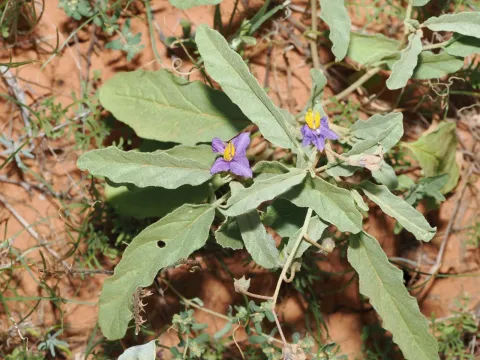
Desert raisin
Solanum esuriale
The Desert raisin (Solanum esuriale) is a perennial herbaceous plant belonging to the Solanaceae family, native to the arid landscapes of Australia. Sowing should be timed for the spring when the soil temperature consistently reaches 18–20 degrees Celsius, ensuring optimal conditions for germination.
What the section contains
Desert raisin
Seeds should be planted at a shallow depth of 1–2 centimeters in well-drained soil. Given their native adaptation to harsh environments, these seeds demonstrate high vitality, although maintaining consistent surface moisture during the first few weeks after sowing is recommended for a uniform stand.
For colder regions, starting seedlings indoors is the preferred method. This practice ensures that the plants are sufficiently robust before being transplanted outdoors, where they will later face the challenges of a naturally exposed, sunny environment.
When transplanting into the field, adequate spacing is crucial. A configuration of 50–60 centimeters between plants allows for optimal airflow, reducing the risk of humidity-related issues while providing enough space for the plant's expansive root system to thrive in competitive soil conditions.
Sunlight is the most critical factor for the successful establishment of the crop. Selecting a plot that receives full sun throughout the day is essential, as the plant’s productivity is directly linked to the amount of photosynthetic energy it can process during the vegetative stage.
The Desert raisin thrives in light, sandy, or loamy soils with a neutral or slightly acidic pH. The primary requirement is excellent drainage, as the species is highly susceptible to root rot if water is allowed to stagnate around the base, even if the plant is inherently drought-tolerant.
This species is exceptionally well-adapted to high temperatures and water scarcity. Its root architecture is designed to access deep soil moisture, allowing it to survive long dry spells that would typically cause other vegetable crops to wither and fail.
Fertilization should be managed carefully. While a balanced application of nutrients during the early growth phase promotes strong structure, excessive nitrogen should be avoided. Over-fertilization with nitrogen often leads to exuberant foliage growth at the expense of fruit production.
Regular cultivation and weeding around the base of the plant are necessary to minimize competition for nutrients and water. Maintaining an open, debris-free soil surface also helps in managing soil temperature and ensuring the roots stay healthy during extreme heatwaves.
While the plant is hardy, providing supplemental irrigation during the flowering and fruit-setting stages can significantly increase the total yield. Precise water delivery, such as drip irrigation, helps maintain steady growth without creating waterlogged conditions.
The yield potential of Solanum esuriale is highly dependent on environmental factors and the level of care provided. While it is a wild-adapted species, consistent irrigation and proper site selection can lead to significant fruit production throughout the growing season.
The fruit typically consists of small berries that undergo a distinct color change as they mature, turning from green to a vibrant yellow or orange. This ripening phase is when the berries reach their peak quality for harvesting.
The Desert raisin has historical and culinary significance. The berries are known for their unique flavor profile and are often processed to be used as a dried ingredient. Their use requires careful handling to ensure that only properly processed fruit enters the supply chain.
As a climate-resilient crop, it represents an interesting prospect for arid-land agriculture. Being able to harvest a consistent product in regions where standard vegetable crops struggle highlights the economic and nutritional value of this specific Solanum species.
Pollination is a vital component of successful fruit set. Encouraging native pollinators to the area by planting companion flowers can improve the density of fruit clusters, thereby maximizing the overall harvest per unit area of the field.
Typical pests affecting this species include the Colorado potato beetle and various aphid species. Scouting the undersides of leaves and stems regularly is a fundamental practice to catch early infestations before they can cause economic damage to the plant's foliage.
Late blight (Phytophthora) is the most significant fungal threat, especially in seasons with uncharacteristically high humidity. Implementing preventive measures such as ensuring proper plant spacing and using copper-based or biological fungicides can mitigate the risk of disease spread.
Root-knot nematodes can pose a challenge, particularly in soil that has seen intensive Solanaceae cultivation. A strict crop rotation schedule—rotating away from the Solanaceae family for 3 to 4 years—is the most effective cultural practice to suppress nematode populations.
Viral pathogens may be introduced via insect vectors like whiteflies. If a plant shows signs of mosaic patterns or leaf curling, it should be promptly rogued and destroyed to prevent the infection from spreading to the rest of the crop.
Integrated Pest Management (IPM) strategies, which prioritize cultural and biological controls over chemical pesticides, are highly recommended. This sustainable approach maintains the health of the surrounding ecosystem while protecting the crop from major threats.
Harvesting requires care, as the mature berries can detach easily. It is best to harvest manually, selecting only those berries that have reached the full orange/yellow color stage to ensure the highest quality and concentration of compounds.
The optimal time for harvest is early in the morning. Harvesting when the plant is cool and dry prevents the berries from bruising easily and helps maintain their structural integrity during the post-harvest storage and processing phases.
After collection, berries should be cleaned of any plant debris and kept out of direct sunlight. Rapid cooling or processing of the fruit is advisable to prevent fermentation or spoilage, especially if the harvest is collected during high-temperature conditions.
For storage, the fruits are often dried. Dehydration is a traditional and highly effective method for preserving the Desert raisin, concentrating its unique flavor and allowing for long-term storage in cool, dry conditions without the need for constant refrigeration.
It is recommended to wear protective gloves during the harvesting process. This precaution is essential to avoid potential skin irritation, as some species within the Solanum genus contain alkaloids or other phytochemicals that can cause reactions upon contact.