
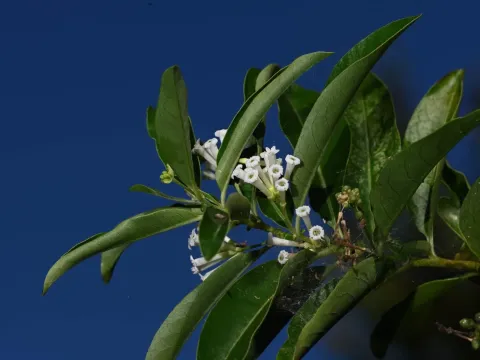
Day-blooming cestrum
Cestrum diurnum
The day-blooming cestrum (Cestrum diurnum) is a robust woody shrub belonging to the Solanaceae family. Originating from the West Indies, it is widely recognized for its fragrant white flowers that open during the day, contrasting with its night-blooming relatives.
What the section contains
Day-blooming cestrum
This species requires a warm, frost-free climate to thrive. It is typically grown as a container plant in temperate regions, where it must be protected from cold temperatures during the winter months to prevent tissue damage and mortality.
The plant demands full sun exposure to promote vigorous growth and blooming. Partial shade is tolerated in extremely hot climates, but consistently low light levels will result in leggy stems and poor flower production.
Soil should be rich, moist, and well-drained. A balanced potting mix that allows for oxygen exchange is crucial for the root system, as the plant is highly sensitive to waterlogged conditions which often trigger root rot.
It is important to emphasize that this plant is toxic. It contains saponins and alkaloids that can be harmful if ingested by pets or humans. Proper placement and caution during maintenance are essential for safe cultivation.
Common pests include aphids, whiteflies, and spider mites. These insects tend to proliferate in greenhouse environments or indoor settings where natural predators are absent and air circulation is limited.
Fungal issues such as leaf spot and root rot are the primary health threats. These are usually managed through cultural practices, including consistent pruning for airflow and precise irrigation management to prevent soil saturation.