
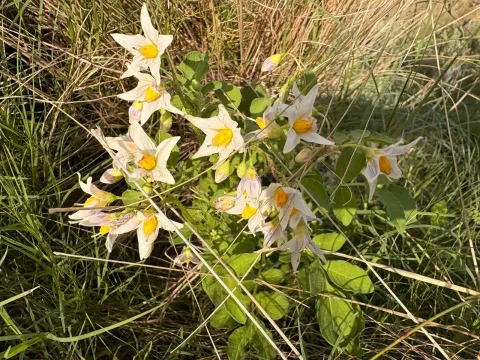
Commerson's nightshade
Solanum commersonii
Commerson's nightshade (Solanum commersonii) is a perennial herbaceous plant belonging to the Solanaceae family. Originating from South America, specifically Argentina, Uruguay, and Southern Brazil, it serves as a crucial wild relative of the common cultivated potato.
What the section contains
Commerson's nightshade
The plant is biologically distinguished by its ability to form small, hardy tubers that facilitate vegetative propagation in harsh natural conditions. Its foliage typically shows a complex, pinnate structure, reflecting its close evolutionary relationship with other potato species.
Regarding its ecological requirements, Solanum commersonii thrives in moist soils and is often found in low-lying areas or along riverbanks. This preference demonstrates a higher tolerance for saturated soil conditions than many other nightshade species.
A defining trait of this species is its significant frost tolerance. This physiological characteristic makes it a primary subject for plant breeders aiming to develop potato varieties that can survive sudden temperature drops and colder growing seasons.
In terms of agricultural utility, it is not grown for commercial consumption but is highly valued for its gene pool. It provides essential traits such as disease resistance and abiotic stress tolerance, which are integrated into commercial cultivars through intensive breeding programs.
The species is susceptible to various fungal pathogens, including late blight (Phytophthora infestans), which remains a major threat to its vegetative development. Genetic research is ongoing to identify specific resistance genes within the species.
Pests that frequently infest these plants include the Colorado potato beetle, aphids, and leafhoppers. These insects not only cause direct mechanical damage but also act as vectors for various plant viruses that severely stunt growth.
Viral pathogens represent a persistent threat to the plant's health, often requiring tissue culture techniques to maintain virus-free breeding stocks. Managing these viruses is critical for preserving the genetic integrity of the species.
Soil-borne pests like wireworms pose a significant risk to the tubers, which can impede research efforts. Careful site selection and soil management are required to protect experimental plots from these infestations.
Integrated pest management strategies, including biological controls and periodic monitoring, are essential for researchers handling Solanum commersonii to ensure the long-term viability of their plant collections.