
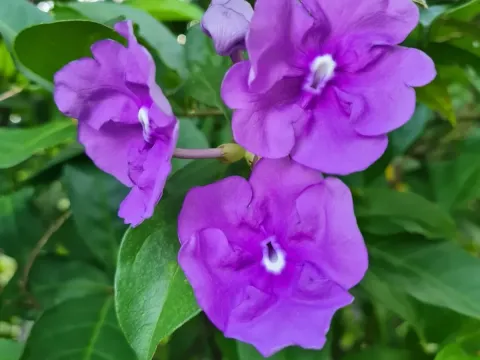
Brunfelsia pauciflora
Brunfelsia pauciflora
Brunfelsia pauciflora is an evergreen shrub belonging to the Solanaceae family. Originating from the tropical regions of Brazil, it is cultivated primarily as a greenhouse plant due to its specific environmental requirements.
What the section contains
Brunfelsia pauciflora
The plant thrives under bright, filtered light conditions. Direct sunlight is detrimental to its foliage, often causing scorching, while insufficient light levels significantly reduce the intensity of its flowering phase.
Cultivation requires a fertile, well-draining, and slightly acidic substrate. Excellent drainage is essential, as the root system of Brunfelsia is highly prone to rot if exposed to waterlogged conditions.
Temperature management is critical for successful growth. The ideal range is between 18 and 24 degrees Celsius during the active vegetative season, with a mandatory cooling period to 12-15 degrees in winter to stimulate budding.
The primary use of Brunfelsia pauciflora is in the ornamental horticulture sector. It is prized for its fragrance and the unique color-changing phenomenon of its flowers, which transition from deep purple to white over several days.
Common greenhouse pests for this species include spider mites, scale insects, and mealybugs. These pests thrive in dry conditions and require frequent monitoring to prevent large-scale infestations.
Chlorosis, resulting from micronutrient deficiencies or improper soil pH, is a frequent physiological disorder. Maintaining the correct acidity level of the growing medium is vital to prevent leaf yellowing.
Root rot, often caused by Pythium or Fusarium species, is the most destructive disease, usually triggered by over-watering. Using sterilized substrates and ensuring proper air circulation is the best preventive strategy.
Powdery mildew can manifest in environments with stagnant air and poor ventilation. Maintaining a consistent climate with adequate airflow is essential for the health of the plant canopy.
Pest management should prioritize cultural and biological controls. Chemical applications should be carefully considered, as the soft tissues of the plant are sensitive to many common agricultural pesticides.