
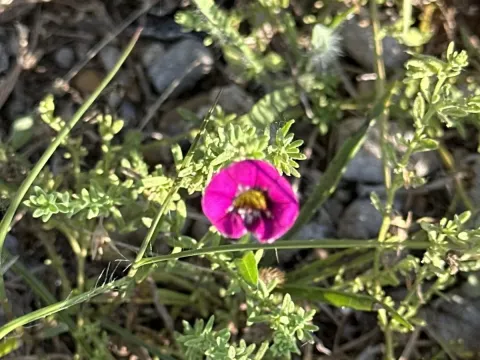
Calibrachoa
Calibrachoa Cerv.
Calibrachoa is a herbaceous perennial genus belonging to the Solanaceae family, widely cultivated as an ornamental crop. Often referred to as "million bells," it is highly prized for its prolific flowering habit and adaptability to container culture.
What the section contains
 Calibrachoa
 excellens x C. ovarifolia
Calibrachoa caesia
Calibrachoa caesia
Calibrachoa
Calibrachoa excellens x C. ovarifolia
Calibrachoa caesia
Calibrachoa caesia
 Calibrachoa excellens
 (R. E. Fr.) Wijsman
Calibrachoa excellens
Calibrachoa excellens (R. E. Fr.) Wijsman
 Calibrachoa humilis
 (R. E. Fr.) Stehmann & Semir
Calibrachoa humilis
Calibrachoa humilis (R. E. Fr.) Stehmann & Semir
 Calibrachoa missionica
 Stehmann & Semir
Calibrachoa missionica
Calibrachoa missionica Stehmann & Semir
 Calibrachoa ovalifolia
 (Miers) Stehmann & Semir
Calibrachoa ovalifolia
Calibrachoa ovalifolia (Miers) Stehmann & Semir
 Calibrachoa parviflora
 (Juss.) D’Arcy
Calibrachoa parviflora
Calibrachoa parviflora (Juss.) D’Arcy
Calibrachoa
Propagation is primarily performed through stem cuttings to ensure the stability of hybrid characteristics, as seed-grown varieties often show significant phenotypic variation. Vegetative propagation allows for faster turnaround times in commercial production.
The optimal timeframe for initiating propagation starts in late winter to ensure well-established plants are ready for the spring market. Cuttings require a sterile, well-draining substrate composed mainly of peat and perlite for optimal aeration.
Temperature control is critical during the rooting phase, ideally maintained between 20 and 22 degrees Celsius. High humidity levels are required initially, but as roots emerge, humidity should be adjusted to prevent fungal issues.
Once rooting is complete, liners are transplanted into containers. Pinching apical meristems is a standard agricultural practice used to promote lateral branching and create a dense, high-quality plant structure suitable for retail.
Success with Calibrachoa depends on maintaining a soil pH between 5.5 and 6.0. High pH levels interfere with iron uptake, resulting in interveinal chlorosis, which significantly degrades the crop's market value.
Plants require high-intensity light for maximum flower production. In greenhouse environments, supplementary lighting may be necessary during low-light winter months to maintain vigorous growth and prevent unwanted stem elongation.
Watering management is crucial; the substrate should be allowed to dry down slightly between irrigations. Excess moisture in the root zone is the most common cause of crop loss due to its sensitivity to root rot pathogens.
A balanced fertilizer program, enriched with chelated iron and essential micronutrients, is necessary throughout the growing season. Fertigation should be adjusted based on the stage of development and the ambient temperature conditions.
While the crop is tolerant of heat, it thrives best in environments with good air circulation. Excessive temperatures combined with poor airflow can lead to rapid moisture loss and decreased flower longevity during the peak summer period.
Iron deficiency chlorosis remains the primary physiological disorder in Calibrachoa cultivation. Regular monitoring of both water pH and substrate pH is essential to prevent nutritional imbalances from becoming chronic.
Root rot pathogens, such as Pythium and Phytophthora, pose a significant threat to greenhouse crops. Good sanitation, sterilization of equipment, and controlled irrigation practices are the most effective methods for prevention.
Insect pests, including aphids, whiteflies, and spider mites, are frequent issues in commercial production. Integrated Pest Management (IPM) strategies, including biological controls and targeted chemical applications, are recommended to maintain quality.
Fungal diseases like powdery mildew can develop if plant spacing is too dense and humidity remains uncontrolled. Maintaining adequate spacing between containers and ensuring constant airflow are key preventative measures.
- Regular monitoring of foliage for signs of pest pressure.
- Calibration of irrigation systems to avoid stagnant water pockets.
- Use of systemic fungicides as a preventative measure during high-risk seasons.