
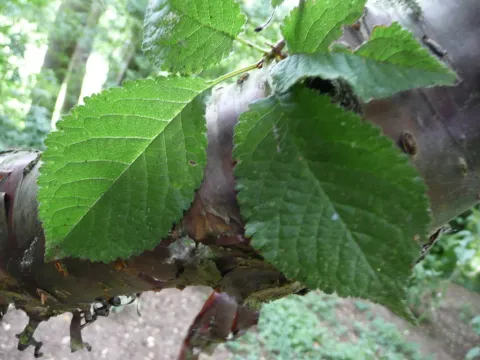
Prunus canescens
Prunus canescens Bois
Prunus canescens, commonly known as the grey cherry, belongs to the Rosaceae family. It is a deciduous shrub or small tree, typically reaching a height of 3 to 5 meters. The species is easily recognized by the dense, greyish pubescence covering its young shoots and the undersides of its leaves, which provides a unique aesthetic texture.
What the section contains
Prunus canescens
Originating from the mountainous regions of China, this plant has adapted to survive in rocky terrain and thickets. In agricultural and horticultural settings, it prefers well-drained loamy or sandy soils. It is relatively adaptable, though it thrives best in environments that mimic its native well-aerated soil conditions.
The climate requirements for Prunus canescens include moderate sunlight and shelter from harsh, drying winds. While it is hardy in temperate climates, protection from severe winter frost is beneficial for younger specimens. It is moderately drought-tolerant once established, but regular moisture during the growing season promotes vigorous foliage development.
Agrotechnical maintenance involves regular mulching to preserve soil humidity and occasional fertilization to support growth. Pruning is usually performed to shape the crown or remove dead wood, ensuring that the plant retains its decorative form throughout the year.
The primary use of Prunus canescens is in landscape design and plant breeding. Due to its compact size and attractive seasonal blooms, it is a favored choice for decorative borders, hedges, and mixed shrub plantings. It also holds potential as a rootstock in stone fruit breeding programs due to its structural characteristics.
This species can be susceptible to common stone fruit diseases, such as cherry leaf spot and monilia blight, especially in high-humidity environments. Implementing proper spacing and pruning for air circulation is crucial to reducing the risk of fungal outbreaks.
Common pests include aphids and leaf-eating beetles. Integrated pest management strategies, including the use of neem oil or targeted insecticidal soaps, are recommended to control infestations without damaging the overall health of the shrub.