
Saturn peach
Prunus persica (L.) Batsch forma compressa (Loudon) Rehder
Description
Growing requirements
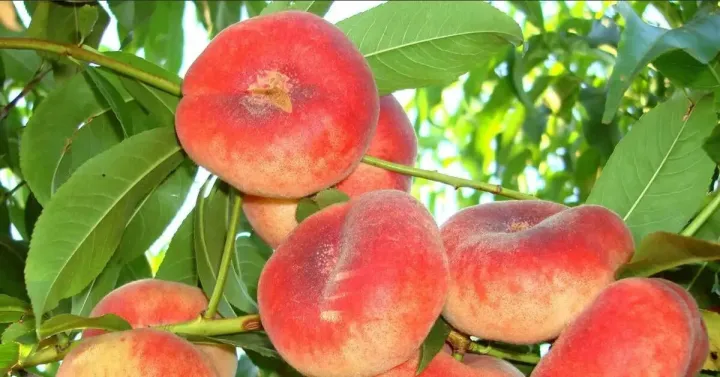
The Saturn peach, also known as the donut peach (Prunus persica forma compressa), is a distinct cultivar within the Rosaceae family. It is recognized for its flat, disc-like shape and sweet, low-acid flesh, which differentiates it from standard round varieties.
Originating from China, this variety has become popular in commercial orchards worldwide, particularly in Mediterranean-type climates. It requires significant solar exposure to thrive, as sunlight is crucial for the development of its signature sweet flavor and sugar content.
Soil requirements are strict: the tree demands well-draining, fertile soil with a slightly acidic to neutral pH. Excessive moisture around the root zone is detrimental, often leading to crown rot; therefore, planting on slightly elevated beds or mounds is a common practice.
Maintenance involves diligent pruning to maintain an open canopy structure. Proper airflow and sunlight penetration are essential to prevent fungal outbreaks. During the growing season, consistent irrigation is necessary, especially during the fruit-sizing stage.
Fertilization should be balanced, focusing on nitrogen in early spring to support vegetative growth and potassium later in the season to enhance fruit quality. Organic matter amendments are highly recommended to maintain long-term soil structure and fertility.
Yield
The Saturn peach is known for its productivity. Once established, the tree can produce a heavy yield, though thinning the fruit early in the season is vital to ensure that individual peaches reach their optimal size and maintain their quality.
Main diseases and pests
Peach leaf curl remains the most common and damaging disease for this species. It is caused by the fungus Taphrina deformans. Prevention relies on timing fungicidal applications in late winter, specifically before the buds begin to swell.
Additionally, brown rot can affect fruit nearing harvest, especially in humid conditions. Removing mummified fruit from the tree and the ground is a critical sanitation practice to minimize inoculum for the following year.
Pest pressures include the oriental fruit moth and aphids. Integrated Pest Management (IPM) strategies, including pheromone traps and biological controls, are preferred to minimize the use of harsh chemicals while protecting the crop.
Harvesting
Harvesting Saturn peaches is a delicate process. Unlike round peaches, the flat shape and soft skin make them highly susceptible to bruising. They should be handled with care and packed in shallow containers to prevent compression.
The harvest window is relatively short as the fruit reaches maturity. Growers often perform multiple picks, selecting only the fruit that shows full color development. Due to their thinner skin and higher sugar levels, shelf life is limited compared to traditional varieties.