
Sand cherry
Prunus pumila L.
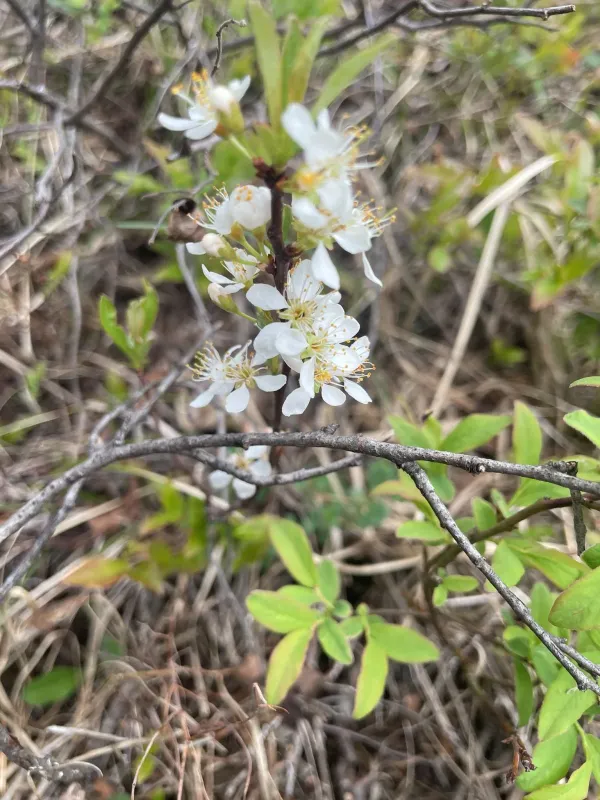
Description
Growing requirements
Sand cherry (Prunus pumila L.) is a member of the Rosaceae family, native to the sandy shores and rocky bluffs of North America. It is a hardy, deciduous shrub highly valued in horticulture for its resilience and ability to thrive in challenging environments.
This species is exceptionally drought-tolerant and cold-hardy, making it a reliable plant for exposed landscapes. It performs best in full sun, where the abundance of light supports vigorous growth and consistent fruit production during the season.
The ideal soil conditions for sand cherry involve well-drained, sandy, or gravelly textures. It struggles in heavy clay soils that retain excessive moisture, which can easily lead to root stress or lethal fungal infections of the crown.
Maintenance involves periodic pruning to keep the shrub's shape and to remove older, non-productive branches. Fertilization should be light; overly rich soil often leads to excessive vegetative growth at the expense of fruit production.
Commercially, the sand cherry is frequently utilized as a dwarfing rootstock for stone fruits, enhancing winter hardiness in hybrids. Its fruits, while small and sometimes tart, are suitable for jams, jellies, and preserves, often attracting birds into the garden.
Main diseases and pests
Leaf spot, commonly caused by the fungus Coccomyces hiemalis, remains a primary threat to sand cherry foliage. Regular application of suitable fungicides and ensuring good air circulation help minimize disease spread.
Aphids are frequent visitors during the spring growth phase, clustering on succulent new shoots. Integrated pest management using natural predators like ladybugs or horticultural soaps is recommended for effective control.
Monilinia brown rot can affect blossoms and fruit, causing severe yield losses in humid weather. Careful removal of mummified fruits left on the shrub over winter is crucial for breaking the infection cycle.
Plum curculio is a significant insect pest that can infest the ripening fruits, rendering them unfit for consumption. Monitoring with traps and timely insecticide applications can mitigate the impact of this beetle.
Root rots caused by Phytophthora species often develop when drainage is inadequate. Proper site preparation with adequate soil amendments is the best preventative strategy against these destructive soil-borne pathogens.