
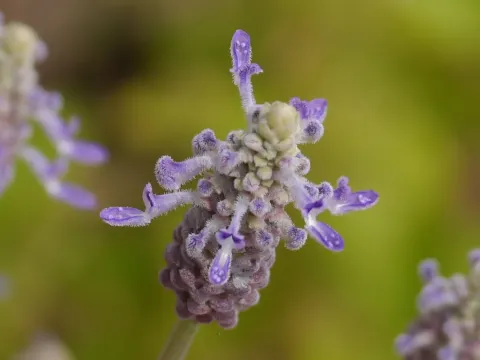
Coleus
Coleus
Propagation of Coleus is primarily achieved through seeds or stem cuttings. Seeds should be sown in trays between February and March to ensure robust seedlings for the planting season.
What the section contains
 Coleus
 scutellarioides
Coleus
Coleus scutellarioides
 Coleus amboinicus
Coleus amboinicus
Coleus amboinicus
 Coleus barbatus
Coleus barbatus
Coleus barbatus
 Coleus caninus
Coleus dewildemanianus
Coleus dewildemanianus
Coleus caninus
Coleus caninus
Coleus dewildemanianus
Coleus dewildemanianus
 Coleus efoliatus
Coleus efoliatus
Coleus efoliatus
 Coleus esculentus
Coleus gracillimus
Coleus gracillimus
Coleus graniticola
Coleus graniticola
Coleus esculentus
Coleus esculentus
Coleus gracillimus
Coleus gracillimus
Coleus graniticola
Coleus graniticola
 Coleus hadiensis
Coleus hadiensis
Coleus hadiensis
 Coleus hybrids
Coleus hybrids
Coleus hybrids
 Coleus maculosus
Coleus maculosus
Coleus maculosus
 Coleus rhodesianum
Coleus rhodesianum
Coleus rhodesianum
 Coleus rotundifolius
Coleus rotundifolius
Coleus rotundifolius
 Coleus thyrsoideus
Coleus thyrsoideus
Coleus thyrsoideus
 Forster's Coleus
Coleus forsteri
Forster's Coleus
Coleus forsteri
 Livingstone's coleus
Coleus livingstonei
Livingstone's coleus
Coleus livingstonei
 Plectranthus paniculatus
Coleus paniculatus
Plectranthus paniculatus
Coleus paniculatus
 Silver coleus
Coleus argentatus
Silver coleus
Coleus argentatus
 Swedish Ivy
Coleus australis
Swedish Ivy
Coleus australis
Coleus
When sowing, distribute the seeds on the surface of moist substrate without covering them, as light is required for germination. Containers should be covered with plastic to maintain moisture.
The optimal temperature for seed germination ranges from 22 to 24 degrees Celsius. Under proper light conditions, seedlings typically emerge within 10 to 14 days.
Vegetative propagation via cuttings is performed throughout the year. This method is highly effective for preserving the specific traits of the parent plant, with cuttings rooting easily in water.
Seedlings are pricked out at the two-true-leaf stage. Transplanting into open ground should only occur after the risk of late spring frosts has completely passed.
Coleus, a member of the Lamiaceae family, is a heat-loving plant. It requires bright, indirect light to maintain the vibrant coloration of its leaves throughout the growing season.
The plant has specific requirements regarding soil moisture. The soil must be kept consistently moist but should not become waterlogged, as excess water leads to root rot.
A fertile, well-draining soil mix with a neutral or slightly acidic pH is ideal. Adding perlite or peat moss is recommended to improve the aeration and drainage properties of the substrate.
Active growth requires a stable temperature between 18 and 25 degrees Celsius. If the temperature drops below 10 degrees, the plant's development slows significantly.
Fertilization should be carried out every two weeks during the growing season. Use balanced, water-soluble fertilizers with moderate nitrogen content to avoid excessive stem elongation.
Spider mites are a primary threat to Coleus, especially in dry air conditions. These pests feed on the sap of the leaves, causing them to dry out and lose their luster.
Whiteflies are another common pest that infests the underside of the leaf blades. This leads to yellowing, leaf curling, and overall weakening of the plant's health.
Excessive watering and poor airflow frequently result in root rot development. Additionally, powdery mildew may appear if there are significant fluctuations between day and night temperatures.
Control measures involve the application of appropriate insecticides and acaricides. Preventive treatments are essential as soon as the first signs of infestation are detected.
- Ensure adequate spacing to promote airflow.
- Monitor soil and atmospheric moisture levels.
- Remove and destroy heavily infested plant parts.
- Apply fungicides when symptoms of fungal diseases appear.
Coleus is grown primarily as an ornamental plant for landscape design and indoor potting. Agricultural practices are focused on maintaining its decorative appearance.
Before the arrival of cold weather in temperate climates, plants should be lifted or moved indoors. This allows for the preservation of parent stock for propagation in the following season.
Systematic pinching of the apical shoots is necessary to stimulate branching. This practice ensures a compact, bushy form and prevents the plant from becoming leggy.
Seed collection is possible under controlled conditions, though vegetative propagation remains the preferred method for most modern ornamental hybrids.
Ongoing maintenance includes the regular removal of dead foliage and damaged stems, which contributes to the rejuvenation of the plant and improves its overall aesthetic value.