
Coleus barbatus
Coleus barbatus
Description
Sowing dates
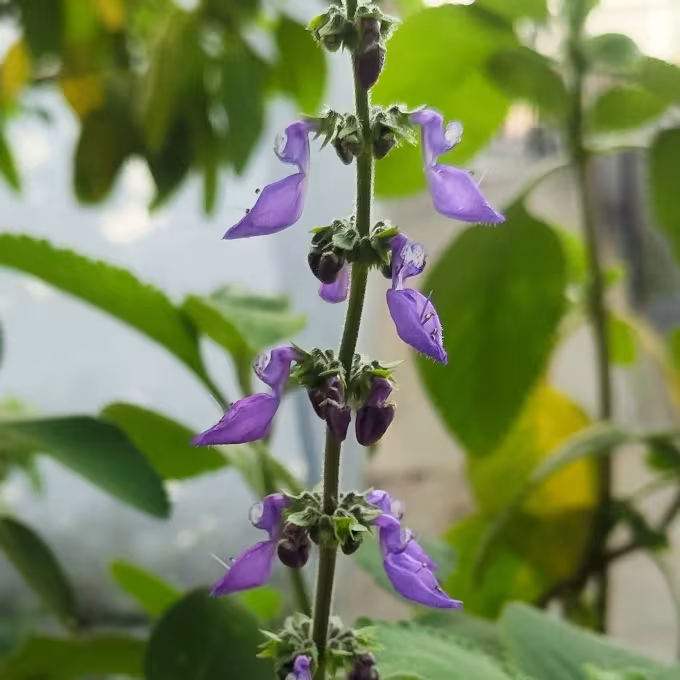
Coleus barbatus, also known as Plectranthus barbatus, is a perennial plant in the Lamiaceae family. Propagation is primarily achieved through stem cuttings, which ensures the genetic consistency of the plant and maintains high levels of secondary metabolites.
When starting from seeds, planting should be done in late winter within a protected environment like a greenhouse. Seeds require a well-draining, nutrient-rich substrate and temperatures between +22 and +25 degrees Celsius for successful germination.
Seedlings should be transplanted into individual pots once they develop their first set of true leaves. Proper lighting is essential during this stage to prevent the plants from becoming leggy and to promote sturdy growth.
Transplanting to the field is performed after all risks of frost have passed. The soil should be adequately prepared and warmed, typically in late spring, to allow for quick establishment and vigorous root development.
The spacing for industrial planting is typically 40x40 cm to 50x50 cm. This density is sufficient to allow each plant to reach its full potential, ensuring a healthy root mass and optimal leaf coverage for commercial harvest.
Growing requirements
This crop thrives in warm, tropical, or subtropical climates, requiring a stable temperature range of +20 to +30 degrees Celsius for optimal metabolic activity. It is highly sensitive to cold and will suffer damage if temperatures drop below +10 degrees.
Full sunlight is preferred, as it stimulates the production of forskolin, the primary active compound. While it can tolerate partial shade in extremely hot regions, excessive shading may reduce the overall yield of active substances.
The soil should be light, porous, and rich in organic matter. Loamy or sandy-loam soils with good drainage are ideal, as the plant cannot tolerate waterlogged conditions which often lead to root rot.
Regular irrigation is vital, especially during the peak growing season. However, it is important to avoid keeping the soil consistently saturated, as this leads to physiological stress and potential fungal infections.
Balanced fertilization is recommended throughout the growing season. Nitrogen should be utilized during the early growth stages, while phosphorus and potassium application is prioritized later to support robust root development.
Yield
The primary economic output is the root system, where forskolin is concentrated. The yield per hectare depends on the age of the plants and the adherence to precision agricultural practices throughout the growth period.
Harvesting usually occurs when the plants are between two and three years old. This is when the concentration of bioactive compounds is sufficient for efficient industrial extraction and purification processes.
Secondary yield can be obtained from the aerial parts of the plant, which are harvested for essential oil extraction. This is done early in the flowering phase when the aromatic properties of the plant are at their peak.
Advanced farming techniques, such as drip irrigation and tailored nutrient management, can significantly increase the total biomass and the concentration of active ingredients in the roots.
Proper post-harvest processing is the key to maximizing yield value. Immediate cleaning and temperature-controlled drying are essential to prevent the loss of potency and ensure the final product meets pharmaceutical quality standards.
Main diseases and pests
The most common pests affecting Coleus barbatus are aphids, spider mites, and whiteflies. These pests thrive in warm, humid conditions and can cause significant damage to the leaves if left uncontrolled.
Fungal diseases, including root rot and powdery mildew, are the most significant threats to crop health. These often develop due to improper soil moisture management and poor air circulation within the canopy.
Integrated Pest Management (IPM) is the best approach to control these threats. Using natural predators or biological controls is often preferred to keep chemical residues out of the medicinal raw materials.
Maintaining proper spacing between plants and implementing strict sanitation protocols, such as removing debris and weeds, significantly reduces the likelihood of infection and pest infestation.
- Monitor leaf undersides frequently for early signs of mite activity.
- Ensure adequate ventilation in greenhouses to lower humidity levels.
- Rotate crops to prevent the buildup of soil-borne pathogens.
Harvesting
Harvesting the roots occurs after the plant has entered a phase of lower activity. Great care must be taken during the lifting process to ensure the roots remain intact and free of unnecessary mechanical damage.
Once harvested, the roots are cleaned of soil and debris, often washed with clean water, and then prepared for the drying phase. This step must be performed promptly to avoid microbial degradation.
Drying is a critical stage that must be conducted at controlled temperatures, ideally not exceeding +45 degrees Celsius, to preserve the thermolabile forskolin compounds within the root tissue.
After reaching the desired moisture content, the roots are milled into specific fractions depending on the intended extraction method. The final product is stored in airtight, moisture-proof packaging.
The final storage conditions must be cool, dark, and dry. Proper storage ensures that the concentration of bioactive compounds remains stable until the raw material is processed into finished medical supplements.