
Coleus caninus
Coleus caninus
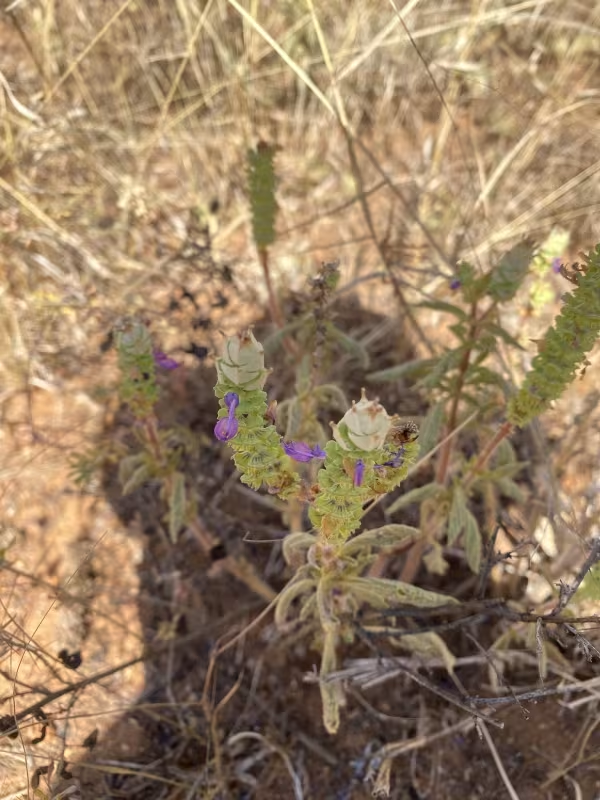
Description
Growing requirements
Coleus caninus, scientifically reclassified as Plectranthus caninus, is a perennial herbaceous plant belonging to the Lamiaceae family. It is native to the arid regions of East and South Africa.
The plant is widely recognized for its ability to thrive in extremely dry conditions, often characterized as a semi-succulent due to its fleshy leaves and stems that retain moisture efficiently.
Agricultural success depends on providing sandy, well-draining soil. The plant is intolerant of waterlogged environments, which quickly lead to root rot and systemic failure of the plant tissue.
Climate requirements include high solar exposure; while it can tolerate partial shade, full sun is necessary to maintain its characteristic compact, upright growth habit.
Cultivation practices involve minimal fertilization, as this species has adapted to nutrient-poor soils in its native habitat. Over-fertilization can result in weak, leggy growth.
Main diseases and pests
The primary agricultural threat to Coleus caninus is excessive soil moisture. Without proper drainage, the plant becomes highly susceptible to various fungal pathogens that destroy the root crown.
There are very few insect pests known to affect this crop significantly. Its chemical profile makes it naturally unappealing to many typical garden herbivores and sap-sucking insects.
In humid indoor or greenhouse conditions, growers may observe mild infestations of spider mites, which can be managed by increasing airflow and reducing humidity levels.
Disease management is largely preventative. Ensuring adequate spacing between plants allows for better air circulation and reduces the risk of fungal proliferation.
No major viruses or bacterial blights are commonly documented for this specific plant under standard field conditions, marking it as a low-maintenance agricultural crop.