
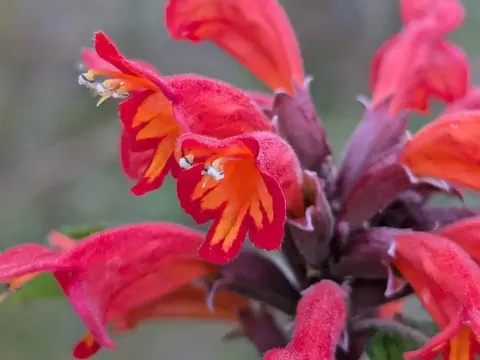
Colquhounia
Colquhounia
Colquhounia is a genus of deciduous or semi-evergreen shrubs belonging to the Lamiaceae family. Native to the mountainous regions of Asia, including the Himalayas and Southern China, these plants are valued for their botanical uniqueness and vibrant flowering habit.
What the section contains

Colquhounia
The morphology of the plant includes opposite leaves, often covered with a fine pubescence, and tubular flowers arranged in distinct whorls or spikes. The flower color spectrum typically ranges from rich orange to deep scarlet, providing high ornamental appeal.
Successful cultivation of Colquhounia requires well-drained, fertile soil with a neutral to slightly acidic pH. The plant is sensitive to waterlogging; therefore, incorporating sand or fine gravel into the planting hole is highly recommended to improve drainage.
The climate requirements involve mild, temperate to subtropical conditions. While the plant possesses moderate hardiness, it requires protection from severe frosts in colder regions, often necessitating winter cover or placement in sheltered microclimates.
In terms of хозяйственное (economic/practical) utility, Colquhounia is almost exclusively utilized for landscape gardening. It serves as an excellent specimen plant, a focal point in flower beds, or as a structural element in warm-climate hedge designs.
The primary threats to Colquhounia are fungal pathogens, specifically those causing leaf spot and powdery mildew. These diseases thrive in environments with poor air circulation and excessive ambient moisture levels.
Pests such as spider mites and whiteflies are common issues, particularly when the shrub is grown in greenhouses or container environments. Regular misting and checking the underside of leaves can help mitigate early infestation.
Root rot remains a critical concern for this genus. It is typically caused by poorly structured soil that retains excessive moisture for long periods, leading to the rapid decay of the delicate root system.
Integrated pest management strategies should be employed to control common insect populations. This includes the use of horticultural oils or insecticidal soaps during early stages of infestation to protect plant foliage.
Maintaining proper plant health involves consistent monitoring for early signs of stress. Ensuring the plant receives adequate sunlight and is not crowded by other vegetation significantly reduces the susceptibility to common botanical threats.