
Swedish Ivy
Coleus australis
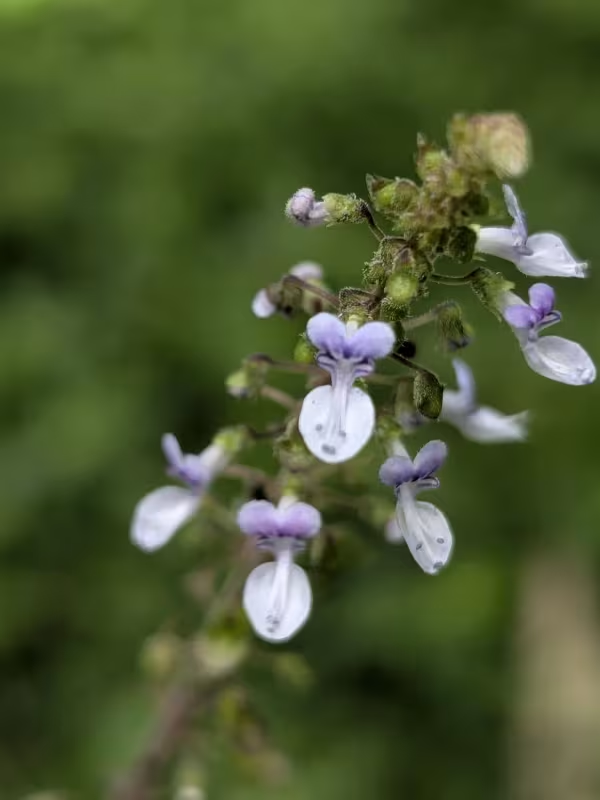
Description
Growing requirements
Swedish Ivy, scientifically classified as Coleus australis (formerly Plectranthus australis), is a robust herbaceous perennial belonging to the Lamiaceae family. Native to Australia, it is highly valued for its trailing growth habit and lush, glossy green foliage.
The plant features succulent-like stems and rounded, scalloped leaves that add texture to indoor spaces. It is widely recognized in agriculture and horticulture as an easy-to-propagate species, capable of growing from stem cuttings in water or moist potting media.
Optimal cultivation requires bright, indirect light to maintain deep coloration and vigorous growth. Placing the plant in direct harsh sun can lead to yellowing or scorching of the leaves, while deep shade will cause the plant to become spindly and lose density.
A well-draining, peat-based soil mix is ideal for Coleus australis. It performs best when the top inch of the substrate is allowed to dry out between waterings, ensuring the root zone remains healthy and well-oxygenated throughout the growing season.
Temperature management is critical for this species. It thrives in standard domestic temperature ranges, ideally between 65°F and 75°F (18°C–24°C). The plant is sensitive to frost and should be moved to protected indoor areas if cultivated in seasonal outdoor conditions.
Main diseases and pests
The most common pests affecting this culture include spider mites, mealybugs, and aphids. These insects tend to congregate on the undersides of leaves or in the leaf axils, requiring frequent monitoring and manual or chemical interventions.
Root rot represents the primary pathological threat, typically induced by overly moist conditions or poor soil structure. Maintaining a balanced irrigation schedule is the most effective preventative measure against fungal pathogens in the root system.