
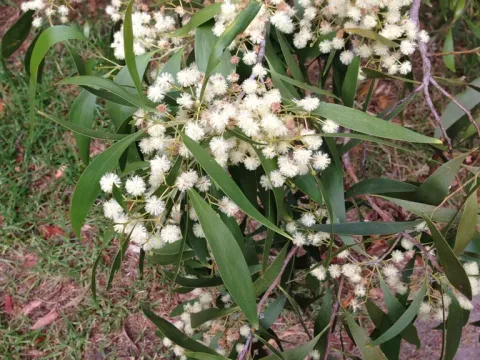
Hickory wattle
Acacia implexa
Hickory wattle (Acacia implexa) is a perennial tree species belonging to the Fabaceae family. It is native to eastern Australia, where it plays a significant role in local biodiversity and forest ecosystems.
What the section contains
Hickory wattle
This species is highly regarded for its remarkable tolerance to diverse soil types, including those with low fertility, high salinity, or rocky composition. It demonstrates superior drought resilience compared to many other leguminous trees.
Optimal growth is achieved in full sunlight environments. While the tree can withstand short-term frost, it thrives best in warm temperate climates and is well-suited for regions experiencing significant rainfall variation.
Botanically, the plant features specialized phyllodes rather than true leaves. These structures are adapted to capture sunlight while reducing water loss, representing a highly efficient evolutionary strategy for surviving arid conditions.
In terms of хозяйственное (economic) use, Hickory wattle is extensively deployed for land rehabilitation, soil erosion prevention, and as a nitrogen-fixing species in reforestation projects. It is also valued for its hardiness in urban landscaping.
The primary pests affecting Acacia implexa include sap-sucking insects like aphids and scale insects, which can weaken younger trees if infestations are left unmanaged during the peak growing season.
Fungal pathogens may emerge in environments with poor air circulation or excessive moisture. Leaf spot and mildews can occur, requiring cultural practices that favor tree canopy aeration.
Wood-boring beetles present a latent threat to mature timber. These insects can compromise the internal integrity of the trunk, increasing the risk of structural failure during strong winds.
Root rot, while less common, is almost exclusively associated with improper drainage. Ensuring that the planting site is well-drained is the most effective preventative measure for this condition.
Wildlife and livestock grazing can also hinder the establishment of new plantations. Protecting young saplings with physical barriers until they reach a sufficient height is recommended to ensure high survival rates.