
Honey thorn
Acacia mellifera
Description
Sowing dates
Honey thorn (Acacia mellifera) is a perennial member of the Fabaceae family, widely known for its shrub-like growth pattern and its significant ecological role in arid regions.
Cultivation starts with seeds, which require mechanical scarification or hot water treatment to breach their hard coats and initiate germination.
Seeds are typically sown at the beginning of the rainy season in well-drained soil, ensuring they are placed at an appropriate depth to prevent dehydration.
Originating from the dry savannas of Africa and the Arabian Peninsula, this plant is naturally adapted to survive with minimal rainfall and extreme heat.
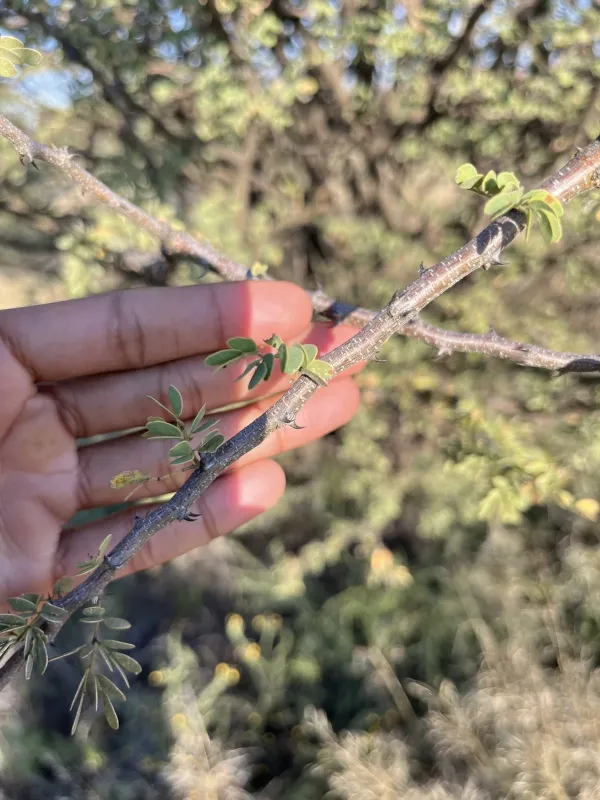
Botanically, it is identified by its distinct hook-like thorns and its ability to fix nitrogen in the soil, which benefits the surrounding environment.
Growing requirements
The plant thrives in a variety of soil types, including sandy, gravelly, and loamy soils, provided they are well-aerated and possess excellent drainage.
Waterlogging must be avoided at all costs, as the roots are highly susceptible to rot when kept in saturated soil for extended periods.
Acacia mellifera is a sun-loving species that requires full exposure to solar radiation to maintain its vigor and nectar production.
It displays remarkable drought tolerance, being capable of surviving in regions where precipitation is extremely erratic and low.
Minimal maintenance is required once the tree is established, though young specimens benefit from weed control to minimize competition for nutrients.
Yield
The primary agricultural utility of this plant is in beekeeping, where it serves as a prolific honey-producing source in arid and semi-arid environments.
The resulting honey is highly valued for its quality and flavor profile, making it a sustainable income source for local beekeeping industries.
The wood is exceptionally hard and dense, which makes it highly sought after for the production of superior quality charcoal and fence posts.
- High-protein fodder for livestock
- Erosion control in degraded landscapes
- Living fences for crop protection
Beyond honey, the leaves and pods are utilized as essential livestock fodder during drought seasons when other forage sources are unavailable.
Main diseases and pests
Young plants are particularly vulnerable to infestation by seed beetles and various larvae that can damage the developing vascular tissues.
Fungal pathogens may cause root rot or leaf spot diseases if the plants are situated in areas with poor airflow and excessive moisture levels.
Parasitic flora, such as mistletoe, frequently colonizes the branches of mature trees, potentially reducing their health and productivity.
Rodent damage to the bark of young stems can lead to girdling, which inhibits nutrient transport and may cause tree mortality.
Effective management against threats involves regular inspection of tree health and maintaining appropriate spacing to improve light and air circulation.