
Georgina Gidgee
Acacia georginae
Description
Growing requirements
Georgina Gidgee (Acacia georginae) is a prominent legume tree species native to the arid interior of Australia, particularly within Queensland and the Northern Territory. It belongs to the Fabaceae family and is well-adapted to harsh environmental conditions.
This tree is highly drought-tolerant, making it a dominant species in desert ecosystems and alluvial plains. It has developed deep taproots that allow it to access groundwater, ensuring survival during prolonged periods of extreme heat and water scarcity.
The preferred soil conditions include heavy clay or loamy textures with effective drainage. While it thrives in saline environments where many other species would fail, it strictly requires adequate light and heat to maintain its physiological processes.
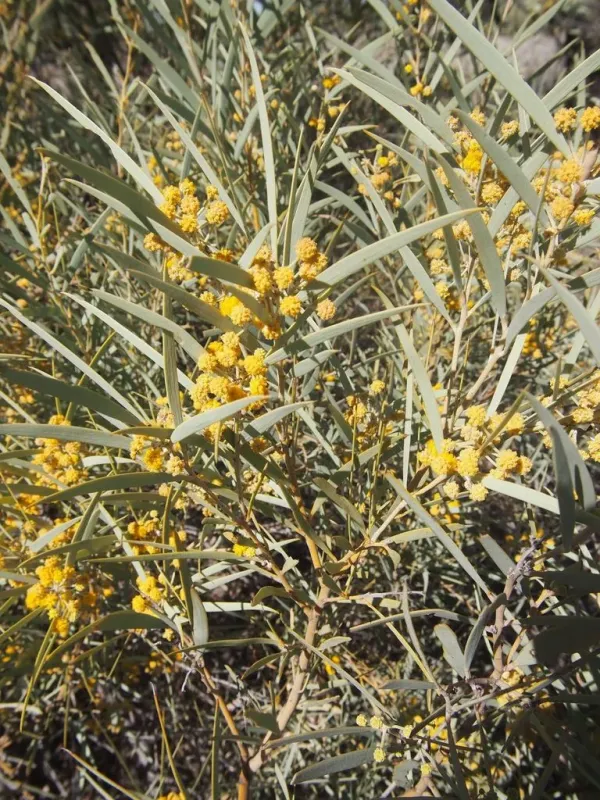
Botanically, Acacia georginae typically grows as a small tree or large shrub reaching heights of up to 8 meters. Its foliage is characterized by silvery-gray, phyllode-like structures that efficiently regulate the plant's water balance.
From an agricultural standpoint, the plant is controversial. While it provides excellent shade and habitat for wildlife in barren regions, it contains significant amounts of fluoroacetate, making it dangerously toxic to livestock, which restricts its utility as fodder.
Main diseases and pests
The primary concern regarding Acacia georginae is its potential to cause fatal poisoning in cattle and sheep. Ingestion of seeds, pods, or leaves, especially during drought when other forage is limited, represents a major risk to farming operations.
The species demonstrates remarkable resistance to typical pests and diseases. Its chemical defenses provide a robust barrier against herbivory, ensuring that the tree remains relatively free from significant defoliation by insects or mammals.
Pathogenic threats are minimal due to the tree's evolution in extreme environments. Although some wood-boring insects may inhabit mature trees, they rarely threaten the overall health or population density of the species in its native range.
Agricultural management mainly focuses on mitigation strategies rather than pest control. Farmers frequently utilize mechanical clearing or controlled grazing management to keep rangelands free of Gidgee to ensure the safety of their animals.
Maintaining clear buffer zones around livestock enclosures is the most effective approach to preventing poisoning. Because of its resilience, eradication is difficult, requiring persistent and strategic land management efforts to control the plant's spread.