
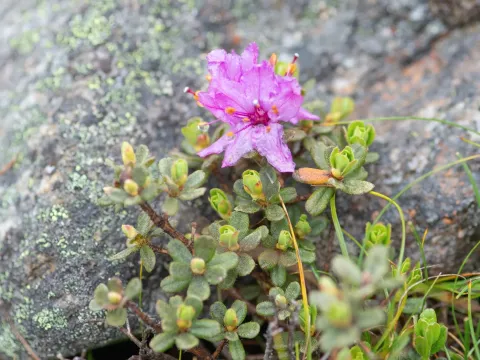
Bristly rhododendron
Rhododendron setosum
The bristly rhododendron (Rhododendron setosum) is a distinctive, low-growing evergreen shrub belonging to the Ericaceae family. Originating from the high-altitude alpine regions of the Himalayas, Tibet, and Nepal, this species is well-adapted to cool and misty environments.
What the section contains
Bristly rhododendron
Botanically, it is characterized by its small, fragrant, leathery leaves covered with tiny, stiff bristles, which serve as a protective mechanism in its native habitat. The plant exhibits a slow growth habit, forming dense, cushion-like mounds that are highly sought after by collectors.
Successful cultivation requires specific climatic conditions that mimic its native subalpine home. The plant thrives in cool temperatures and high humidity, making it an excellent choice for northern or elevated garden sites where shade is available during the heat of the afternoon.
Soil requirements are strict, necessitating a well-drained, acidic medium with a pH between 4.5 and 5.5. A mixture of peat moss, perlite, and coniferous compost is recommended to ensure adequate drainage while maintaining the acidity levels critical for nutrient uptake.
In terms of agricultural and horticultural use, this rhododendron is utilized primarily as an ornamental specimen. Its compact size makes it perfect for rock gardens, heather beds, and container gardening, providing vibrant color through its purple to pinkish flowers during the blooming season.
The primary threats to this culture are root rot diseases caused by poor drainage and waterlogged soil conditions. Phytophthora infection is a common concern that requires proactive soil management and the use of sterile growing substrates.
Pest management focuses on controlling spider mites and lace bugs, which can rapidly damage the foliage. Regular monitoring and the application of horticultural oils or appropriate systemic insecticides are essential for maintaining plant vigor and aesthetic appeal.