
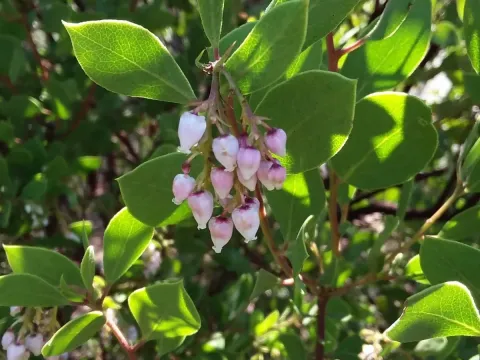
Bristly manzanita
Arctostaphylos hispidula
The Bristly manzanita (Arctostaphylos hispidula) is a distinctive evergreen shrub belonging to the Ericaceae family. It is recognized by the dense, bristly hairs that cover its young branches and foliage.
What the section contains
Bristly manzanita
Native to the coastal regions of North America, particularly Oregon and California, this species thrives in chaparral ecosystems. It is well-adapted to surviving long periods of drought in its natural habitat.
In cultivation, this plant requires well-drained, acidic soil. It is highly intolerant of heavy, waterlogged conditions, which can lead to rapid decline. Providing a sandy or rocky substrate is essential for success.
It prefers full sun exposure to maintain its compact, attractive growth habit. While it is drought-tolerant once established, supplemental irrigation during the first year is necessary for root system development.
It is primarily valued for its ornamental appeal in xeriscaping and sustainable landscaping. Its evergreen foliage and unique texture make it an excellent choice for rock gardens and erosion control on slopes.
Common health issues include fungal leaf spots and root rots caused by Phytophthora species, which often proliferate in soil that lacks sufficient drainage or remains perpetually damp.
Pest pressure is generally low, but scale insects and aphids may occasionally attack the tender new growth. Integrated pest management, focusing on biological controls or horticultural oils, is highly effective.
Proper spacing between plants is crucial to facilitate airflow, which significantly reduces the risk of fungal outbreaks such as powdery mildew during humid, stagnant periods.
Avoiding the use of high-nitrogen fertilizers is recommended, as this can force overly rapid growth, making the branches brittle and more susceptible to pathogen entry and frost damage.
Sanitation practices, including the removal of dead or diseased foliage, remain the best defense against persistent plant pathogens that may harbor in the surrounding debris.