
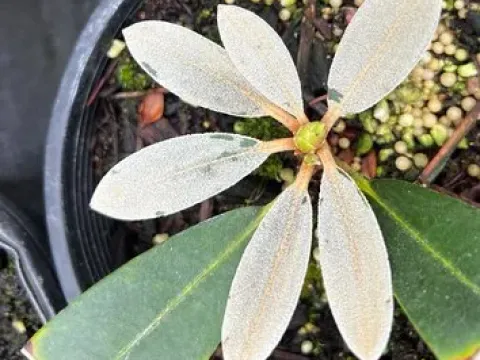
Bristle-haired rhododendron
Rhododendron chaetomallum
Rhododendron chaetomallum is a distinctive evergreen shrub belonging to the Ericaceae family. It is native to the high-altitude regions of the Himalayas, specifically parts of Tibet and Yunnan, where it grows in cool, moist environments often associated with mountainous slopes.
What the section contains
Bristle-haired rhododendron
The botanical characteristics of this species include stiff, leathery leaves with a unique, thick, rusty-brown indumentum (hair-like covering) on the undersides. Its flowers, typically appearing in clusters, feature deep crimson or dark red colors that provide high ornamental value.
Successful cultivation requires acidic, well-draining, and humus-rich soil. A pH range of 4.5 to 5.5 is essential for optimal nutrient uptake. The plant thrives in semi-shaded locations where it is protected from intense sunlight and harsh drying winds.
Climate requirements include high atmospheric humidity and moderate ambient temperatures. It is not drought-tolerant and requires consistent moisture throughout the growing season, though it must never be left in waterlogged conditions to prevent root rot.
The primary use of this species is in specialized gardens, botanical collections, and as a parent plant for breeding cold-hardy, ornamental rhododendron hybrids. Its aesthetic appeal makes it a favored subject for woodland garden displays.
Common health threats include root rot and Phytophthora wilt, which are primarily caused by poor drainage or overwatering. Maintaining a porous, organic-rich soil structure is the most effective preventative measure against these infections.
Pests such as the rhododendron leafhopper and scale insects can significantly impact the foliage. These pests feed on sap, often leaving the leaves discolored or deformed, which reduces the plant's overall photosynthetic capacity.
Spider mites are another frequent problem in warmer, drier conditions. Growers should monitor for fine webbing on the undersides of the leaves and apply suitable miticides if an infestation is detected early.
Sanitation is a vital part of disease management; all fallen leaves and debris should be cleared from the base of the plant to prevent the overwintering of fungal spores and insect pests.
Regular monitoring combined with proper fertilization (specifically using fertilizers for acid-loving plants) ensures the rhododendron maintains its natural vigor and resistance to common environmental stressors and pathogens.