
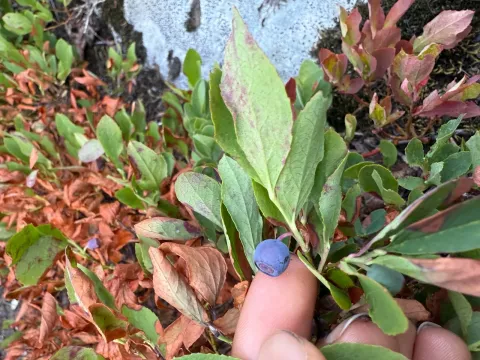
Cascade blueberry
Vaccinium deliciosum
Vaccinium deliciosum, commonly known as Cascade blueberry, is a shrub belonging to the Ericaceae family. It is native to the subalpine regions of the Cascade Mountains in North America.
What the section contains
Cascade blueberry
The plant thrives in cool, moist climates. It prefers sites with full sun exposure, which is essential for the optimal accumulation of sugars in the berries during the maturation process.
The soil requirements are strict: the medium must be highly acidic, with a pH between 4.5 and 5.5. It must be rich in organic matter and have excellent drainage properties to prevent root suffocation.
Root system health depends on a symbiotic relationship with mycorrhizal fungi. Therefore, avoiding soil compaction and using appropriate mulch, such as pine needles or sawdust, is vital for success.
The shrub is remarkably cold-hardy, well-adapted to high-altitude environments. It requires a period of winter dormancy to set flower buds properly for the following season.
The fruit of Vaccinium deliciosum is renowned for its intense flavor and sweetness. Harvesting is typically done by hand as the berries reach their peak color and firmness.
Berries are medium-sized, globular, and covered with a distinctive glaucous bloom. They ripen sequentially, often requiring multiple picking passes throughout the season.
In terms of usage, these berries are considered a gourmet product. They are highly prized for fresh market sales, as well as for high-end culinary applications like preserves, tarts, and wine-making.
Post-harvest handling should be immediate, cooling the fruit to maintain its integrity and shelf life. The berries are delicate and susceptible to mechanical damage.
Proper harvest management also involves monitoring the plant's health, as berry production can vary significantly based on the age of the canes and pruning intensity.
Common phytosanitary issues include fungal pathogens such as rusts and various leaf spots, which are exacerbated by high humidity and poor air circulation within the shrub canopy.
Root rot caused by Phytophthora species is a major threat if soil drainage is compromised. This is why site selection and soil preparation are the most critical steps in cultivation.
Insects like aphids and thrips can cause damage to tender new growth, potentially reducing plant vigor and subsequent fruit yield in affected sections of the field.
Integrated Pest Management (IPM) strategies are recommended, focusing on maintaining plant vigor through proper fertilization and pruning to discourage pest infestation.
Regular monitoring of the field for signs of chlorosis or wilting is essential to catch diseases early and prevent them from spreading across the entire berry patch.