
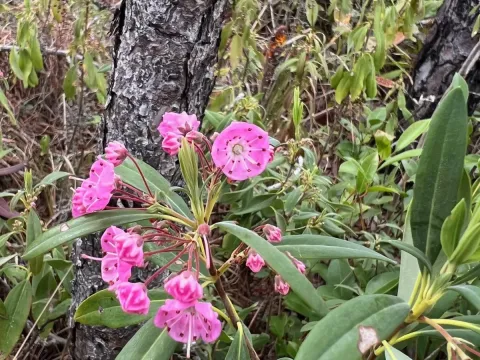
Carolina laurel
Kalmia carolina
Carolina laurel (Kalmia carolina) is an evergreen ornamental shrub belonging to the Ericaceae family. Native to the eastern regions of North America, it naturally thrives in damp, acidic soil conditions often found in boggy forests or woodland edges.
What the section contains
Carolina laurel
This shrub is known for its slow-growing habit and dense, evergreen foliage consisting of lanceolate, leathery leaves. The biological structure of the plant makes it an ideal candidate for rock gardens and specialized acidic soil landscaping.
Successful cultivation of Kalmia carolina necessitates a low soil pH, ideally ranging between 4.5 and 5.5. A planting substrate must be rich in organic matter, such as peat moss or decomposed pine needles, to mimic the plant's natural habitat.
The plant performs best in locations with partial shade, protecting the foliage from intense midday sun exposure. In cooler climates, more sun exposure can be tolerated provided that the soil moisture levels remain constant throughout the growing season.
Water management is critical for this species. The root system is delicate and prone to damage if the soil becomes waterlogged; however, it is equally intolerant of prolonged drought. Regular mulching is recommended to retain soil moisture and regulate ground temperature.
Carolina laurel is primarily susceptible to fungal diseases such as leaf spot and root rot, which are often exacerbated by poor drainage and excessive ambient humidity.
Common insect pests include scale insects and spider mites, which can cause significant damage to the plant's foliage if left unmonitored during hot, dry spells.
Maintaining proper spacing between individual plants is essential to promote airflow and reduce the humidity levels that encourage fungal pathogen development.
The use of balanced, acid-loving plant fertilizers during the early spring helps the shrub maintain its health and increases its resistance to common environmental stresses.
Pruning should be performed with caution, focusing only on the removal of dead or diseased wood, as the plant has a slow recovery rate from heavy trimming.