
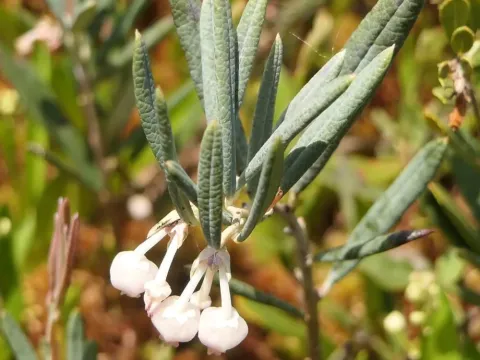
Bog rosemary
Andromeda glaucophylla
Bog rosemary (Andromeda glaucophylla) is a member of the Ericaceae family, known for its distinct glaucous leaves and bell-shaped pink flowers. It is native to the northern regions of North America, typically thriving in acidic bogs and peatlands.
What the section contains
Bog rosemary
To cultivate this species successfully, growers must replicate its native conditions, primarily focusing on highly acidic soil (pH 3.5–5.0). The medium should be rich in organic matter, such as sphagnum peat or specialized ericaceous compost, to support mycorrhizal growth.
The plant thrives in partial shade with consistent moisture levels. While it requires humidity, excellent drainage is essential to prevent root asphyxiation, as the plant is sensitive to stagnant water in the root zone.
Maintenance involves frequent mulching with pine needles or acidic peat to suppress weed growth and retain soil moisture. Fertilizer application should be minimal, using only formulas designed for acid-loving shrubs to avoid chemical stress.
Due to its high cold tolerance, this plant is well-suited for northern landscapes. Its compact growth habit and evergreen nature make it an excellent choice for rock gardens, heather beds, or container culture in controlled environments.
The primary threats to Andromeda glaucophylla involve fungal diseases induced by poor soil drainage. Root rot is a common issue when the substrate becomes compacted or waterlogged, leading to the decay of the fine root system.
Foliar diseases such as leaf spots can occur during periods of high humidity and poor air circulation. Managing these threats involves thinning out dense plantings and applying appropriate fungicides during the early stages of symptom development.
Spider mites represent the most significant pest risk, especially in drier environments. Infestations lead to discolored foliage and a general decline in plant vigor; regular inspection and overhead misting are effective preventative measures.
While insects are not generally a major problem due to the acidic nature of the leaves and soil, occasional monitoring for aphids is recommended during the spring flush. Mechanical removal or mild insecticidal soaps are typically sufficient for control.
Long-term protection is achieved through careful environmental management, ensuring the plant is not subjected to drought or excessive fertilizer salts. A stable, moist, and acidic root zone remains the best defense against both pests and pathogens.