
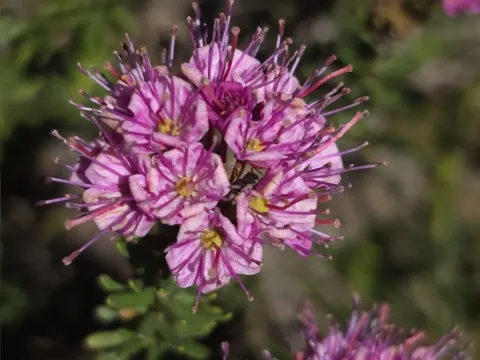
Brewer's mountain-heather
Phyllodoce breweri
Brewer's mountain-heather (Phyllodoce breweri) is a low-growing, evergreen shrub native to the high-elevation regions of California. As a member of the Ericaceae family, it thrives in cool, moist, and well-drained environments similar to its natural mountain habitat.
What the section contains
Brewer's mountain-heather
Cultivating this species requires careful site selection. It performs best in partial shade, particularly protected from intense afternoon sun, which can cause significant stress to the foliage and root system during the summer months.
The soil must be acidic, loose, and rich in organic matter, such as peat moss or well-decomposed conifer needles. Excellent drainage is non-negotiable; the roots are highly susceptible to rot if allowed to sit in waterlogged soil for any extended period.
Consistent moisture is required throughout the growing season, but the water quality is paramount. Using soft or rainwater is strongly recommended, as tap water containing high levels of calcium or magnesium will gradually alter the soil pH and harm the plant.
Maintenance involves applying a layer of organic mulch, such as pine bark, around the base of the shrub. This practice helps to regulate soil temperature, preserve moisture, and prevent the growth of weeds that compete with the plant for nutrients.
Root rot caused by Phytophthora species is the most severe threat to Brewer's mountain-heather. It is almost always a result of poor drainage or overwatering, necessitating strict adherence to irrigation protocols and site preparation.
Fungal leaf spot diseases may occur in conditions with high humidity and stagnant air. Providing adequate spacing between plants and avoiding overhead irrigation can significantly reduce the risk of such infections during the vegetative period.
While relatively resistant to common garden pests, aphids or spider mites may occasionally infest stressed plants. Biological controls or mild insecticidal soaps are preferred, as these plants can be sensitive to stronger chemical treatments.
Nutrient deficiencies, particularly chlorosis caused by high pH levels, represent a major physiological challenge. Once the soil becomes less acidic, the plant struggles to uptake essential micronutrients, leading to yellowing leaves and eventual decline.
Winter desiccation is a risk in areas with fluctuating temperatures and drying winds. Providing light protection during the coldest months, especially for young plants, ensures that they emerge in spring with healthy, undamaged foliage.