
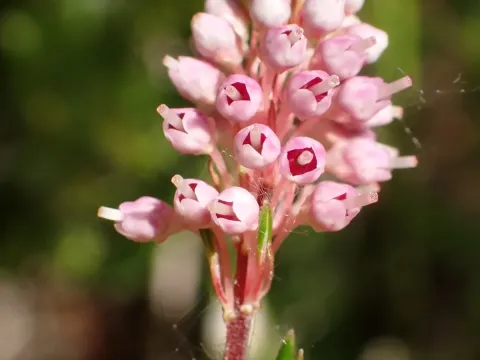
Bruckenthalia spiculifolia
Erica spiculifolia
Bruckenthalia spiculifolia is a distinct, low-growing evergreen shrub belonging to the Ericaceae family. Historically linked to the genus Erica, it is prized for its attractive, spiky foliage and clusters of pinkish, bell-shaped flowers.
What the section contains
Bruckenthalia spiculifolia
Native to the mountainous regions of Southeastern Europe, this plant thrives in acidic and well-drained soils. Its natural habitat is typically rocky, sunny slopes, which informs its requirements in a managed garden setting.
Cultivation success relies heavily on replicating these specific environmental conditions. Gardeners must ensure a soil pH between 4.5 and 5.5, utilizing a mixture of peat, coarse sand, and pine bark to promote healthy root respiration.
Regarding climate, Bruckenthalia prefers temperate conditions with good airflow. While it is hardy in cold temperatures, it benefits from protective mulch during winters to prevent root desiccation and soil heaving in regions with little to no snow cover.
In landscaping, this species is highly valued for its slow growth rate and compact habit, making it an excellent candidate for rock gardens, heather beds, and containers. It provides significant aesthetic value when planted in groups.
The most common disease affecting Bruckenthalia is root rot, typically caused by Phytophthora species. This condition is triggered by waterlogged soil and poor drainage, which eventually starves the roots of necessary oxygen.
Fungal infections, such as grey mould (Botrytis), can occur during prolonged periods of high humidity or excessive overhead watering. Ensuring adequate spacing between plants is essential to maintain optimal airflow and prevent moisture buildup.
Pests are generally manageable, but spider mites can cause significant damage during hot, dry spells. They manifest as fine webbing and mottled foliage, and can be treated with specific acaricides if identified early.
Cultural prevention remains the primary line of defense. Avoiding high-nitrogen fertilizers that encourage soft, succulent growth can make the plant less susceptible to both fungal attacks and sap-sucking insects.
Regular maintenance, including the removal of dead or crossing branches after flowering, improves the plant's overall health. Monitoring the soil moisture levels daily during peak summer months is a critical step in disease prevention.