
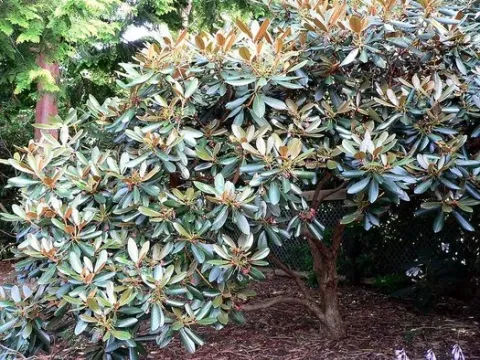
Brown rhododendron
Rhododendron fulvum
Rhododendron fulvum is a distinguished evergreen shrub or small tree belonging to the Ericaceae family. Native to the mountainous regions of southwest China and northeast Myanmar, this species thrives in cool, humid forest environments at high altitudes, adapting well to woodland garden settings.
What the section contains
Brown rhododendron
The plant is botanically recognized by its large, leathery, dark green leaves which are uniquely adorned with a thick, cinnamon-colored or rusty-brown indumentum on the underside. This distinctive feature makes it a prized specimen for collectors and enthusiasts of rare ornamental shrubs.
Successful cultivation requires strict adherence to soil chemistry, specifically maintaining highly acidic conditions with a pH between 4.5 and 5.5. The soil must be rich in organic matter, exceptionally well-drained, and consistently moist to ensure the health of the fine, fibrous root system.
Regarding climate, Rhododendron fulvum prefers dappled shade and shelter from harsh, desiccating winds and intense mid-day sun. It performs best in regions with mild summers and high atmospheric humidity, which can be supplemented in gardens through regular mulching and proper site selection.
In terms of хозяйственного use, this species is primarily valued in ornamental horticulture for its architectural form and early-season flowering. It is an excellent choice for woodland plantings, large rock gardens, or as a focal point in specialized collections of ericaceous plants.
The main threats to Rhododendron fulvum include root rot diseases, such as Phytophthora, which typically occur in poorly drained soils or waterlogged conditions. Preventive measures include ensuring proper aeration of the root zone and avoiding over-irrigation during periods of high rainfall.
Common pests include the rhododendron leafhopper, which causes stippling damage to the foliage, and the vine weevil, whose larvae can severely damage the roots. Spider mites may also infest the plant during hot, dry spells, necessitating the use of targeted acaricides for control.