
Cassiope
Cassiope
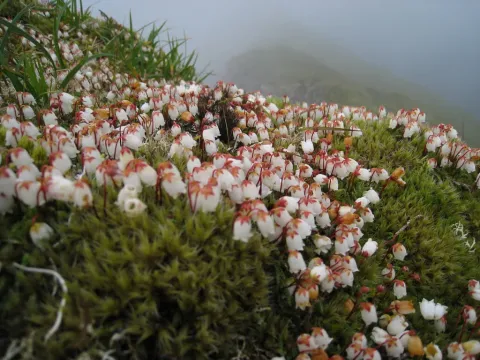
Cassiope is a genus of low-growing evergreen shrubs belonging to the Ericaceae family. These plants are native to the arctic, subarctic, and alpine regions of the Northern Hemisphere, where they often form dense, mat-like ground covers.
What the section contains
Cassiope
Botanically, these plants are known for their scale-like leaves that overlap in four rows, giving the stems a distinctive, moss-like or lycopod-like appearance. The flowers are typically bell-shaped, often appearing in white or pink shades.
Success in cultivating Cassiope depends on mimicking its natural, cool, and humid habitat. The plants perform best in environments with high atmospheric humidity and moderate temperatures, avoiding intense summer heat.
Soil requirements are strict: the medium must be acidic, well-draining, and rich in organic matter. A mixture consisting of peat moss, coarse sand, and conifer needles is considered ideal for maintaining consistent moisture.
The cultural care involves steady watering with soft, non-calcareous water. Because Cassiope species have a slow growth rate, they require minimal pruning, primarily focused on removing dead stems after winter.
Root rot remains the most significant threat to Cassiope, usually triggered by waterlogging or inadequate drainage. Proper placement on raised slopes or rock gardens helps prevent stagnant water from damaging the root system.
Spider mites are common pests that thrive when humidity levels drop. Regular misting and maintaining a cool, moist microclimate are the most effective non-chemical ways to keep these pests at bay.
Aphids can occasionally colonize young succulent growth during the spring. If an infestation occurs, application of insecticidal soaps is usually sufficient to manage the population without damaging the plant.
Chlorosis, manifesting as yellowing foliage, is a sign of high pH levels in the soil. Growers must ensure the substrate remains sufficiently acidic to allow nutrient uptake by the roots.
Fungal diseases like powdery mildew can occur if there is insufficient air circulation. Thinning out competing plants around the Cassiope cluster can improve airflow and reduce fungal risks significantly.