
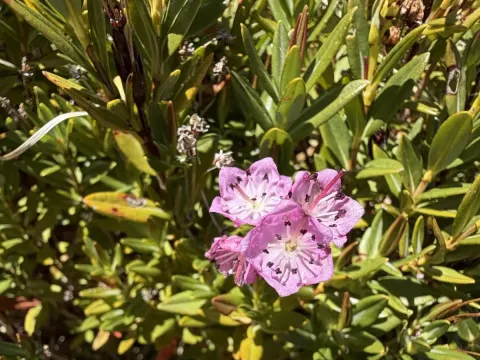
Bog laurel
Kalmia microphylla
Bog laurel (Kalmia microphylla) is a charming evergreen shrub from the Ericaceae family. Known for its small, leathery leaves and stunning cup-shaped flowers, it serves as a sophisticated addition to alpine-style gardens and peat beds.
What the section contains
Bog laurel
Native to the subalpine and alpine regions of North America, this species thrives in wet, acidic environments such as bogs, marshes, and meadows. It is highly valued for its natural resilience and ability to withstand freezing temperatures.
Successful cultivation requires a specialized acidic soil mixture. A substrate composed of sphagnum peat, pine bark, and perlite provides the necessary drainage and acidity levels ranging from 4.5 to 5.5.
Moisture management is the cornerstone of bog laurel maintenance. The soil must remain consistently moist but never waterlogged. Providing a consistent supply of rainwater is crucial, as mineral-heavy tap water can increase pH and stress the plant.
Regarding light, it thrives in partial shade or bright, indirect sunlight. Exposure to harsh afternoon sun can desiccate the foliage, so positioning the plant in a spot with protection from direct midday heat is highly recommended.
Root rot caused by Oomycetes and various fungal pathogens is the most common threat. These issues typically emerge when soil drainage is insufficient, leading to prolonged anaerobic conditions for the roots.
Leaf spot diseases may occur during humid, overcast seasons. Maintaining good air circulation around the shrub is a simple but effective strategy to reduce the risk of foliage infections.
Insects like scale insects or mealybugs can occasionally affect the plant. These pests are often hidden on the stems or undersides of leaves, requiring regular monitoring to prevent infestations.
Leaf-feeding beetles can cause significant aesthetic damage. In ornamental settings, hand-picking or the application of organic soap-based insecticides is generally sufficient to manage these populations.
It is important to remember that all parts of the Kalmia genus contain grayanotoxins, making them naturally resistant to most grazing animals, which is a major advantage for woodland landscaping.