
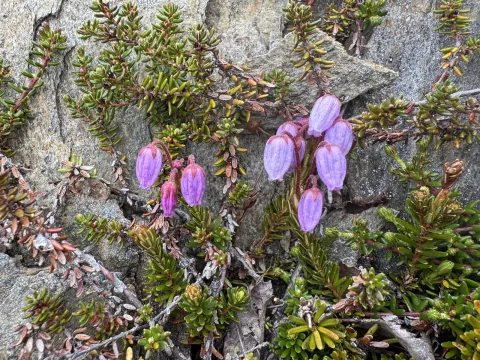
Blue mountainheath
Phyllodoce caerulea
Blue mountainheath (Phyllodoce caerulea) is a small, evergreen shrub belonging to the Ericaceae family. It is naturally found in arctic-alpine environments, thriving in cool, subarctic regions across the northern hemisphere, often in rocky or acidic heathland habitats.
What the section contains
Blue mountainheath
The plant features woody, prostrate stems that create a dense, mat-like growth habit. Its small, leathery leaves are needle-like and persist throughout the winter, providing year-round texture in specialized rock gardens or alpine collections.
Cultivation requires strict adherence to soil acidity, as this plant is an acidophile. It demands a well-draining, nutrient-poor substrate enriched with peat, composted pine needles, or similar organic matter to simulate its natural mountainous environment.
Environmental conditions are crucial; blue mountainheath prefers cool temperatures and high atmospheric humidity. In warmer garden climates, it must be planted in partial shade to avoid intense afternoon sun, which can cause severe dehydration and leaf burn.
Watering management involves maintaining consistent soil moisture without allowing water to pool. Using specialized mulch, such as acidic grit or pine bark, helps to insulate the root system and retain moisture effectively during drier periods of the growing season.
Root and crown rot are the primary threats to Phyllodoce caerulea, typically caused by poor drainage or overly compacted, waterlogged soil. These diseases can progress rapidly, making the plant difficult to save once symptoms appear on the foliage.
Pests such as scale insects and spider mites occasionally infest the foliage, particularly if the plant is stressed by high temperatures or insufficient air circulation. These pests extract sap, leading to stunted growth and discolored leaves.
To prevent disease, avoid overhead watering, which creates damp conditions favorable for fungal growth. Providing adequate spacing between plants and ensuring good air movement are essential cultural practices for maintaining a healthy specimen.
Monitoring the plant for early signs of infestation is vital. If pests are detected, horticultural oils or insecticidal soaps can be applied as a control measure, provided they are compatible with ericaceous plant species.
Annual sanitation by removing dead or diseased branches keeps the plant tidy and prevents the build-up of inoculum. Maintaining a balanced nutrient regime, specifically avoiding high-nitrogen fertilizers, is necessary to promote healthy, slow growth rather than weak, succulent tissue.