
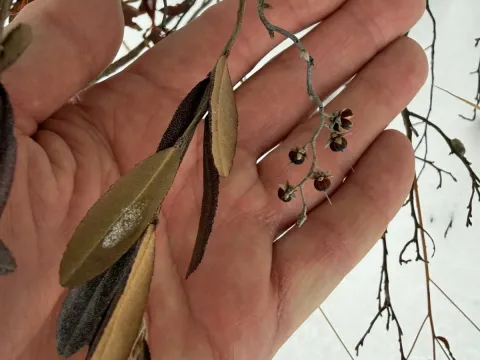
Chamaedaphne
Chamaedaphne
Chamaedaphne, commonly known as leatherleaf, is a hardy evergreen shrub belonging to the Ericaceae family. It is native to the northern regions of the Northern Hemisphere, typically thriving in peat bogs and low-lying wetland habitats.
What the section contains
Chamaedaphne
Successful cultivation requires specific soil conditions, specifically a highly acidic environment with a pH ranging between 3.5 and 5.0. Gardeners should provide a moisture-retentive, peat-based substrate that mimics the plant's natural bog environment to support root health.
The plant is highly frost-tolerant and adapted to temperate and arctic climates. It performs best in full sun, which encourages vigorous growth and better flowering density, though it can withstand partial shade in areas with intense summer heat.
A consistent moisture supply is essential, as leatherleaf does not tolerate drought conditions. Applying an organic mulch, such as pine needles or acidic compost, helps retain moisture and stabilizes the soil temperature throughout the active growing season.
In landscaping, Chamaedaphne is valued for its unique foliage and white, bell-shaped flowers that bloom in the spring. It serves as an excellent choice for rock gardens, heath-themed plantings, and areas surrounding water features where the soil remains consistently moist.
Pathogenic threats primarily include root rot diseases, which are usually triggered by poor drainage or excessive water stagnation. Ensuring that the soil remains moist but well-aerated is the primary preventative measure for the plant's longevity.
While generally robust, the plant can be susceptible to spider mites or aphids if environmental stress factors are present. Implementing regular horticultural inspections and providing optimal growing conditions usually suffice to prevent significant pest infestations.