
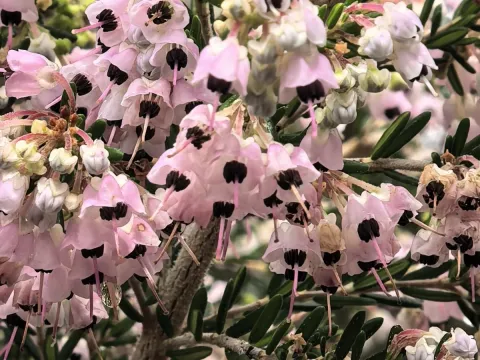
Channelled heath
Erica canaliculata
Erica canaliculata, commonly known as the channelled heath, is a flowering shrub belonging to the Ericaceae family. Originating from the Cape region of South Africa, it is widely recognized for its profuse and attractive flowering spikes.
What the section contains
Channelled heath
This shrub can grow up to two meters in height. Its botanical profile is characterized by evergreen, needle-like foliage with a distinct channel along the leaf surface, which provides a unique texture to the shrub's architecture.
Cultivation success relies heavily on soil conditions. The plant requires acidic, well-draining soil with a pH typically between 4.5 and 5.5. In garden settings, soil amendments such as peat moss or pine bark are often necessary to lower the pH.
Watering management is critical. Channelled heath thrives in moist environments but cannot tolerate waterlogged roots. High-quality drainage layers in the planting hole or container are essential to prevent root rot.
The plant prefers full sun exposure to maintain its compact habit and produce abundant flowers. In regions where temperatures fall below freezing, it must be protected or grown as a container plant, as it is not frost-hardy.
The most significant threats to Erica canaliculata are soil-borne pathogens, specifically Phytophthora species. These fungi thrive in damp, poorly drained soils and can kill healthy plants rapidly.
Pests such as spider mites and mealybugs can infest the foliage, particularly in warm and dry conditions. These pests suck the sap from the stems and leaves, leading to weakened plants and stunted growth.
Root aphids may also be a concern, causing the plant to struggle despite adequate care. These pests are often hidden below the soil line, making early detection via root inspection vital for container-grown specimens.
To minimize these risks, gardeners should avoid overcrowding, which promotes poor airflow and fungal development. Implementing a strict irrigation schedule ensures the roots remain healthy and resilient against environmental stresses.
Should chemical intervention be required, it is essential to use products formulated specifically for Ericaceous plants to avoid leaf burn or toxicity, as these shrubs are sensitive to many common garden chemicals.