
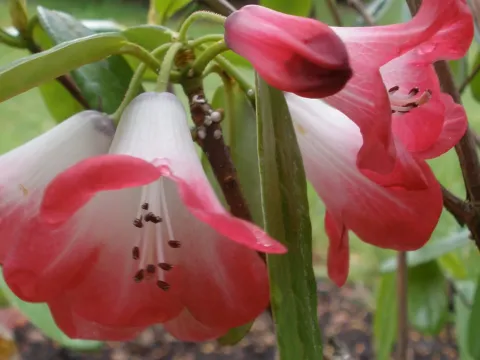
Cherry-red rhododendron
Rhododendron cerasinum
The cherry-red rhododendron (Rhododendron cerasinum) is a member of the Ericaceae family. It is a slow-growing evergreen shrub known for its beautiful bell-shaped flowers, which can range from creamy-white to a deep, intense cherry-red.
What the section contains
Cherry-red rhododendron
Native to the high-altitude regions of the Himalayas, including Southeast Tibet and Myanmar, this species thrives in cool, humid environments with consistent moisture levels throughout the growing season.
To succeed in cultivation, it requires acidic, well-draining soil with a pH between 4.5 and 5.5. Incorporating organic matter such as peat or pine needles is essential to mimic its natural forest floor habitat.
The plant prefers semi-shaded locations protected from harsh winds and direct afternoon sun, which can cause leaf scorch and dehydration, especially in warmer or drier climates.
General care involves regular irrigation with non-alkaline water and mulching to keep the root system cool. Fertilization should be limited to specific acid-loving plant formulas, applied strictly during the spring season.
Common pathological issues include root rot and fungal leaf spots, which are often triggered by waterlogged soil conditions or poor airflow around the foliage in crowded planting sites.
Pests such as rhododendron bugs, aphids, and spider mites can pose a significant threat to the plant, leading to yellowing leaves and reduced vigor if infestations are not controlled promptly.
Maintenance should include the removal of deadwood and infected foliage to ensure proper air circulation and prevent the spread of fungal spores across the shrubbery.
Chemical control using systemic insecticides and copper-based fungicides is recommended for managing severe outbreaks, following specific label rates for Ericaceae species.
Maintaining high plant health through proper mulching and balanced moisture management is the best defense against pests and diseases throughout the lifespan of the shrub.