
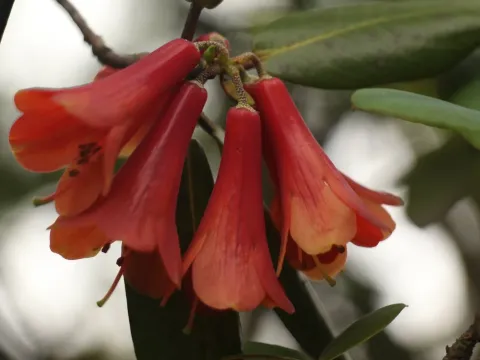
Cinnabar Rhododendron
Rhododendron cinnabarinum
The Cinnabar Rhododendron (Rhododendron cinnabarinum) belongs to the Ericaceae family. This evergreen shrub is native to the high-altitude regions of the Himalayas, including Nepal and Bhutan, where it thrives in cool, moist, and misty environments found at high elevations.
What the section contains
Cinnabar Rhododendron
To successfully cultivate this species, site selection is paramount. The plant requires a sheltered location with partial shade, as intense direct sunlight can damage the leaves. High atmospheric humidity is essential, making this plant better suited for temperate regions with cool, wet summers.
Regarding soil, this rhododendron strictly demands acidic conditions (pH 4.5–5.5). The medium should be organic-rich, highly porous, and well-draining. Adding decomposed pine needles or peat moss to the planting hole is a standard practice to ensure optimal growth and root health.
Botanically, this species is distinguished by its unique tubular-campanulate flowers, which often hang in clusters. The color palette is quite diverse, ranging from classic cinnabar red to yellow and orange hues, often accompanied by glossy or glaucous foliage.
The ornamental value of this shrub is widely recognized by landscaping professionals. It is frequently incorporated into alpine gardens and woodland landscapes where conditions mimic its native mountain habitat, providing a focal point due to its elegant growth habit and vivid blooms.
The primary pests affecting this rhododendron include spider mites and rhododendron bugs, which suck sap from the foliage. Regular monitoring is necessary, and if infestations occur, horticultural oils or systemic insecticides should be applied to protect the plant.
Fungal issues, such as root rot caused by Phytophthora, pose a significant threat. These diseases are almost always linked to poor drainage or overly compacted soil. Ensuring adequate aeration of the root zone and avoiding standing water are the best preventive measures for long-term survival.