
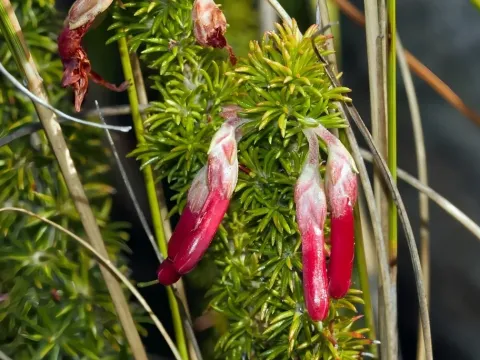
Erica coccinea
Erica coccinea
Erica coccinea, commonly known as scarlet heath, is a member of the Ericaceae family. This evergreen shrub originates from the Cape region of South Africa, where it thrives in specific environmental conditions characterized by well-drained soils and high sunlight.
What the section contains
Erica coccinea
The primary requirement for successful cultivation is the soil composition. Erica coccinea demands light, porous, and highly acidic soil with a pH level between 4.0 and 5.5. In garden settings, the soil must be supplemented with peat or coniferous litter to maintain these specific acidity parameters.
This species is highly sensitive to temperature fluctuations and is not frost-tolerant. In many climates, it is best grown as a container plant. This allows gardeners to move the plant to a sheltered location during the colder months, ensuring it remains within the optimal range of +15...+22 degrees Celsius.
Watering must be performed with caution. The plant requires soft water free from calcium, as lime presence can rapidly alter the soil's chemistry and damage the plant's health. The root ball should be kept consistently moist but never waterlogged to avoid root rot.
Mulching is a crucial aspect of Erica coccinea care. Using pine bark or coniferous needles around the base of the plant helps retain moisture, regulates soil temperature, and suppresses weed growth while simultaneously promoting the necessary acidic environment for root development.
Fungal diseases are the most significant threats to Erica coccinea, particularly when irrigation practices lead to water stagnation. Root rot and phytophthora represent the most severe risks, often leading to rapid decline if detected too late.
Powdery mildew can occur in environments with poor air circulation. To minimize this risk, it is essential to ensure adequate spacing between plants and maintain a consistent flow of fresh air, especially when growing them in greenhouses or indoor areas.
Pest infestations, particularly spider mites and scale insects, are common when the plant is kept in dry, stagnant air. These pests can cause significant damage to the foliage and weaken the plant's overall vigor if not addressed immediately.
Integrated pest management, including the use of acaricides and insecticidal soaps, is recommended for controlling outbreaks. Periodic inspection of the foliage is vital to ensure that infestations are treated at the earliest possible stage, preventing widespread damage.
Finally, avoid using fertilizers that contain chlorine or heavy amounts of lime, as these can stress the plant and reduce its natural resistance to environmental pressures. Providing balanced, specialized nutrients for heath-type plants is the best preventative strategy.