
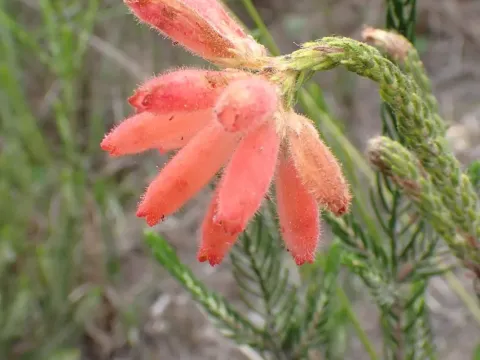
Erica cerinthoides
Erica cerinthoides
Erica cerinthoides, commonly known as the wax heath, is a stunning evergreen shrub belonging to the Ericaceae family. It is native to South Africa, where it thrives in diverse environments ranging from coastal plains to rocky slopes.
What the section contains
Erica cerinthoides
This species is characterized by its tubular, wax-like flowers that are highly attractive to pollinators. The plant typically reaches a compact size, making it suitable for both container gardening and specialized ericaceous landscapes.
Successful cultivation depends on strictly adhering to acidic soil requirements. The substrate must be well-drained, porous, and rich in organic matter to mimic the plant's natural habitat conditions.
Erica cerinthoides requires plenty of sunlight to promote flower production. While it prefers cool, breezy conditions, it is sensitive to severe frost and must be protected in colder climates, often kept in greenhouses during winter.
Routine care involves regular, light watering with soft or rainwater to maintain consistent soil moisture levels. It is essential to avoid using alkaline fertilizers or tap water containing high lime content, as these can be toxic to the plant.
The primary threat to the wax heath is root rot, typically caused by improper drainage and waterlogging. Once the root system is damaged by excess moisture, recovery is often difficult.
Spider mites are common pests that thrive in dry environments. They cause disfigurement of leaves and overall decline, which can be mitigated by increasing humidity and using appropriate miticides if necessary.
Fungal issues such as powdery mildew can occur if air circulation around the plants is insufficient. Proper spacing during planting is a key preventive measure against such infections.
Aphids can infest tender new growth, drawing sap from the plant and causing stunted development. Integrated pest management, including natural predators or mild soaps, is recommended for control.
Regular monitoring of the foliage is crucial for maintaining the health of Erica cerinthoides. Early detection of any stress symptoms allows for quick corrective actions, ensuring the longevity and ornamental value of the plant.