
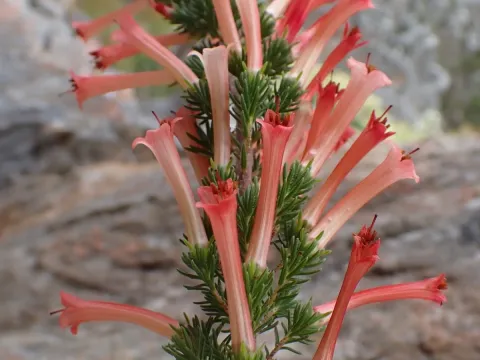
Erica curviflora
Erica curviflora
Erica curviflora is a perennial evergreen shrub belonging to the Ericaceae family. Native to the Cape region of South Africa, this species is well-adapted to the unique environmental conditions of its habitat.
What the section contains
Erica curviflora
The plant thrives in well-lit environments but requires protection from intense midday sun in hotter climates. It prefers regions with stable, mild temperatures, as it is sensitive to severe frost which can damage its vegetative structure.
Soil requirements for this crop are strict: the medium must be highly acidic and well-draining. Cultivators often utilize specialized mixes of peat, sand, and pine bark to ensure the roots remain oxygenated and the pH levels stay optimal.
Botanically, the plant is characterized by its elongated, curved tubular flowers that provide significant visual interest. Its foliage is dense and needle-like, requiring minimal pruning to maintain a healthy and aesthetic growth habit.
The primary agricultural use of this plant is in the ornamental horticulture sector. It is widely valued for its long-lasting blooming season and is often cultivated for high-end landscape design and floral arrangements.
Fungal infections pose the most significant threat to the health of Erica curviflora. Phytophthora root rot is particularly prevalent in poorly drained soils and can be fatal to the plant if not detected early.
Common pests include spider mites and scale insects, which thrive in indoor or greenhouse settings where humidity levels are not properly regulated. Infestations can lead to severe weakening and foliage drop.
Chlorosis is a frequent issue caused by incorrect soil pH, preventing the plant from absorbing essential nutrients. Maintaining a strictly acidic environment is the primary way to prevent this physiological condition.
Integrated pest management protocols should be followed, prioritizing preventative care such as proper spacing for air circulation and careful monitoring of watering cycles.
In case of severe infestations or infections, the use of specialized systemic fungicides or miticides is required to save the specimen, while affected sections should be pruned and disposed of to prevent spread.